S
Stroppy
What I would like to know is why, when I've had a few minor shocks from RCD-protected circuits, they have never noticed that I am 'stealing' some current and tripped?
Interesting post,ackbar...it put me in mind of an incident that occurred when i was about 16...a mate of mine let his family pet,one yorkshire terrier out by accident and it run straight under a passing shell oil petrol tanker.He picked up the "remains",ran to his dads' garage,put it on the bench and started prodding it with the croc clips of an old battery charger.The sad,limp mess started to twitch and jerk about and he was sure he was helping...This taught me a valuable lesson,JUST because you CAN do something,DOSENT always mean you should......the skips calling...

Next time I'll try and grab my multimeter and record how many milliamps I'm taking.Answered your own question!! lol!! Not enough contact, for a long enough period of time!! lol!!
I call it the Stroppy Practical Ramp Test.What I would like to know is why, when I've had a few minor shocks from RCD-protected circuits, they have never noticed that I am 'stealing' some current and tripped?
How would a chemists help?

Right you bunch of reprobates. ....
Here's an update.
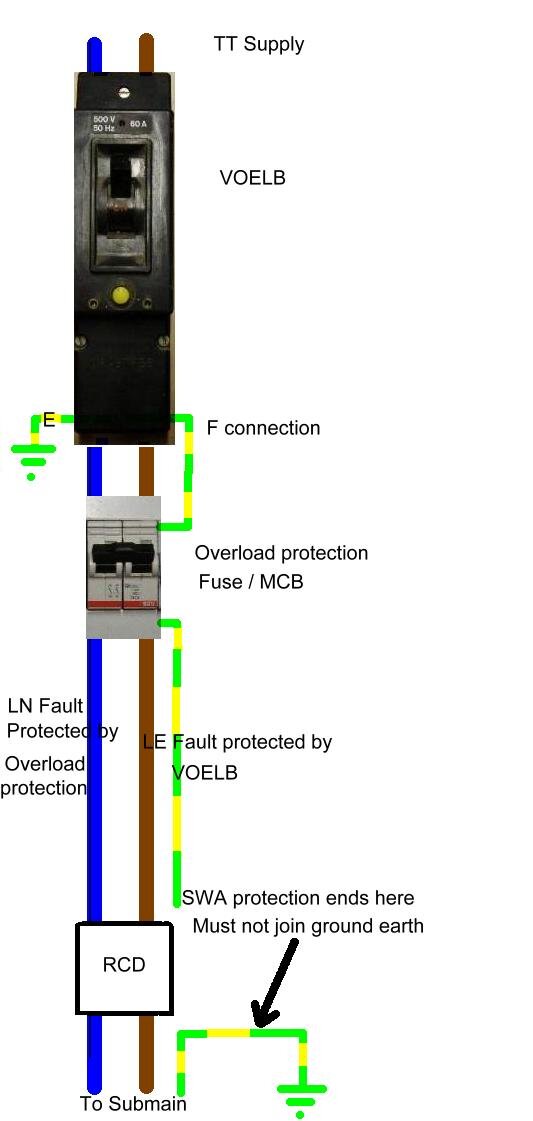
This is the theory
View attachment 17750
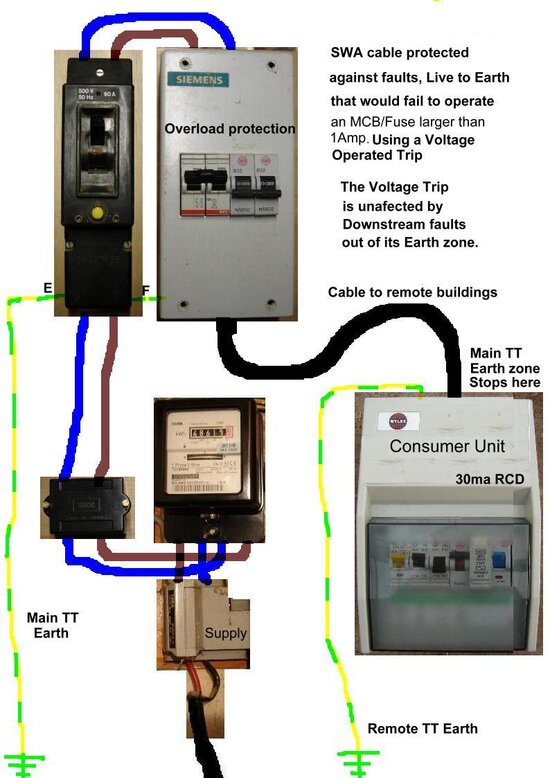
and this is our interpretation
View attachment 17751
You can all go back to sleep now ......
Anyone know who invented the VOELCB?
Bet he was gutted when the RCD came out.
, but am I being too picky by saying shouldn't the Ze be 200 or less? looks like its 244.So your using the VOLCB to protect the SWA L - E faults, divorcing the far end so no faults appear on the RCD circuits and vice versa. The Rcd protects the Downstream circuit via a second Electrode to ensure the VOLCB sees no voltage.
Whats the purpose again?[/QUOTE]
I can't remember
However, I think you have the answer in the first paragraph