Changeover switch, legality

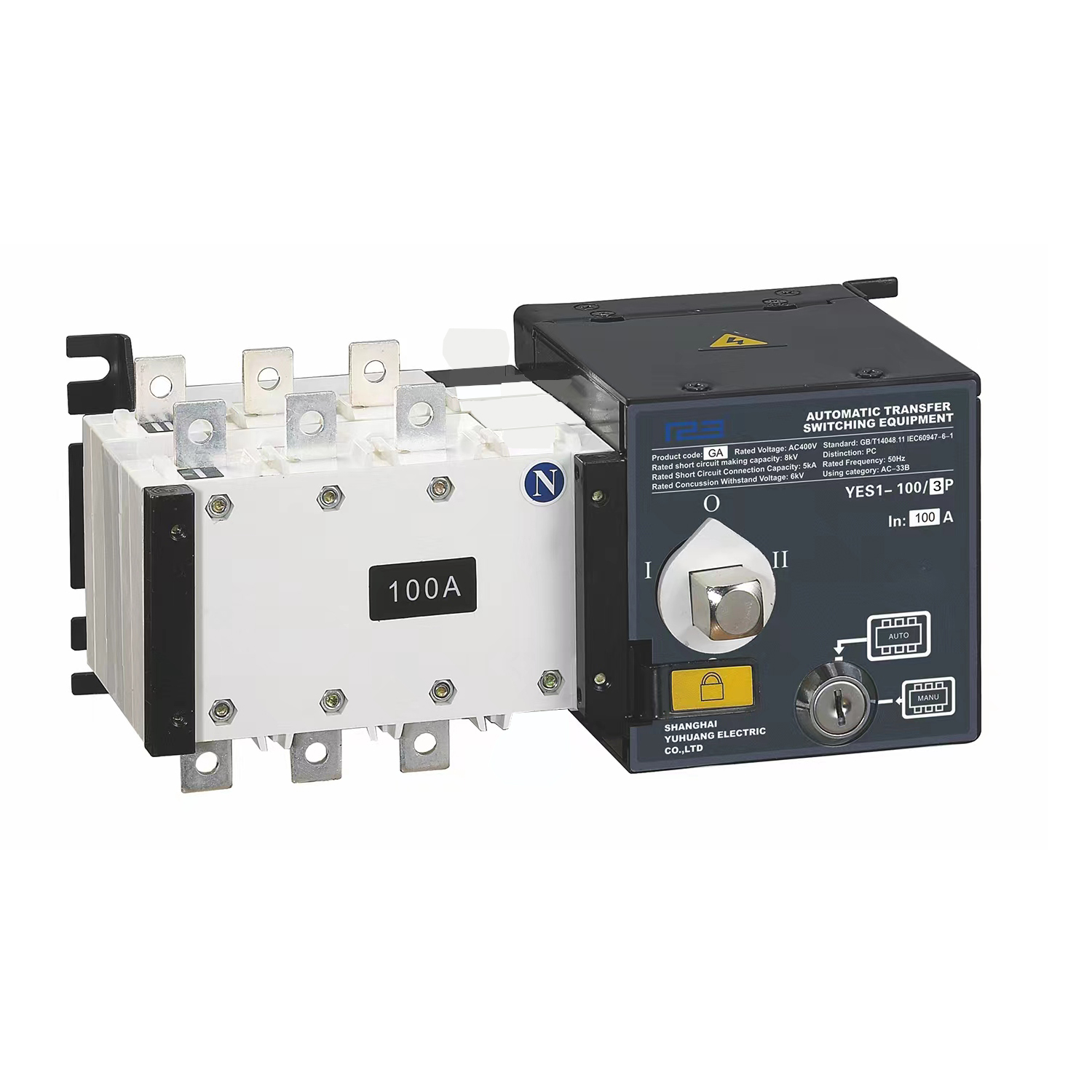
I'd like to discuss a low cost automatic grid source / generator source changeover switch, rated around 100A and intended for domestic installations. These are available widely on Ebay and Amazon for around £30-£40. Some sport reference to various Chinese standards, others also sport CE compliance graphics. An example might be Geya W2R-100.

My purpose is to switch a domestic consumer unit between an island / non grid connected solar / battery system, and the DNO grid. Such that there is never any possibility of a connection between the off-grid system and the grid.

I'm a retired qualified electrician who spent most of my time on site in the 90's tyrapping armoured for pizza ovens, so I'm rusty.

I'm employing a solar specialist electrician at the moment to do my installation for me, but he's cautious of these transfer switches. I'm less cautious but still not fully convinced they're totally acceptable for use in the UK.

Is the fact that this product has a CE marking (assuming due process has genuinely been followed) sufficient at the current date (early October 2025) to confirm an installer is legally at liberty to install it, provided they do so in a suitable and safe configuration, in the UK?

I'm confused by the appearance in recent times of the "UKCA" marking scheme which seems to be going back and forth a lot. One minute it seems to be a must-have, the next minute CE is still perfectly acceptable.

I did email the UK Government Office for Product Safety and Standards to ask for clarification however it was clear from the response they did not understand the question I was asking. They simply directed me to report the specific item/seller as counterfeit/non compliant to Trading Standards.

So far, I have not found an example of this type of equipment that sports a UKCA compliance graphic. Then again, I'm having a hard time finding ANY vaguely related piece of switchgear (RCD's, MCB's, 3 position rotary DPDT, etc) that sports UKCA even from major outlets like CEF.

Regardless, whatever the situation regards marking turns out to be I won't be pushing my installer to install something either of us suspect of having been marked erroneously, or outside of it's legitimate electrical bounds, all things considered, including it's potential failure modes.

There are so many possibilities within "Failure Modes".
 
Last edited:
I'd like to discuss a low cost automatic grid source / generator source changeover switch, rated around 100A and intended for domestic installations. These are available widely on Ebay and Amazon for around £30-£40. Some sport reference to various Chinese standards, others also sport CE compliance graphics. An example might be Geya W2R-100.

My purpose is to switch a domestic consumer unit between an island / non grid connected solar / battery system, and the DNO grid. Such that there is never any possibility of a connection between the off-grid system and the grid.

I'm a retired qualified electrician who spent most of my time on site in the 90's tyrapping armoured for pizza ovens, so I'm rusty.

I'm employing a solar specialist electrician at the moment to do my installation for me, but he's cautious of these transfer switches. I'm less cautious but still not fully convinced they're totally acceptable for use in the UK.

Is the fact that this product has a CE marking (assuming due process has genuinely been followed) sufficient at the current date (early October 2025) to confirm an installer is legally at liberty to install it, provided they do so in a suitable and safe configuration, in the UK?

I'm confused by the appearance in recent times of the "UKCA" marking scheme which seems to be going back and forth a lot. One minute it seems to be a must-have, the next minute CE is still perfectly acceptable.

I did email the UK Government Office for Product Safety and Standards to ask for clarification however it was clear from the response they did not understand the question I was asking. They simply directed me to report the specific item/seller as counterfeit/non compliant to Trading Standards.

So far, I have not found an example of this type of equipment that sports a UKCA compliance graphic. Then again, I'm having a hard time finding ANY vaguely related piece of switchgear (RCD's, MCB's, 3 position rotary DPDT, etc) that sports UKCA even from major outlets like CEF.

Regardless, whatever the situation regards marking turns out to be I won't be pushing my installer to install something either of us suspect of having been marked erroneously, or outside of it's legitimate electrical bounds, all things considered, including it's potential failure modes.

There are so many possibilities within "Failure Modes".
Geya has a EN certification from udem for the Geya W2R-100 that it complies with EN 60947-6-1:2005+A1:2014.

udem is a recognised compliance body.

A CE mark is a self declaration that the product meets European Standards and so is less reliable. (open to abuse)
 
As above
You could contact Geya and ask them for a copy of the Certificate of Conformity for the product you are interested in.
That should tell you all the standards it complies with (electrical, EMC?, ROHs etc), and indicate the compliance body/ test house that undertook the testing. That would be enough "due diligence" in my book to support using the device.
 
Definitely avoid Amazon and also other online market type sales sites.
Only buy over the counter from UK wholesalers or online U.K based electrical suppliers.

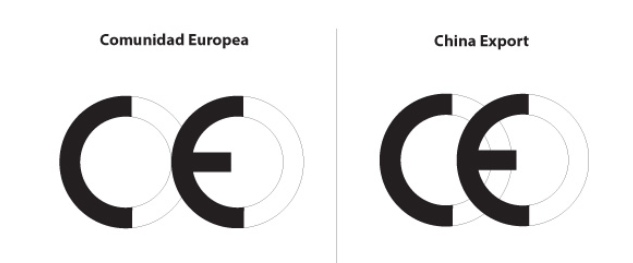
CE on Chinese goods usually signifies Chinese Export.
When CE is misused there's a very subtle difference from the CE we expect.

Spot the difference at first glance if you can,

Screenshot 2025-10-09 114036.png
 
Looking at some of the ready built transfer panels being sold, there seems another popular ATS unit made by YUYE being used.

Thinking aloud - the devices you suggest all need building into an enclosure, to give the required protection, so you or the electrician are going to be building a "product" that itself needs to comply with standards and regulations - creepage and clearance distances, IP rating, insulation resistance, heat dissipation and touch temperatures, earthing - I could go on!
If your electrician is doing the work I suggest it might be just as economical to buy in a fully built ATS assembly - i.e. a turnkey solution!
Downside £500, but someone else is taking responsibility for safety, reliability and compliance 🤔

A random EBay(!) sort of example, for generator, I'm assuming similar available for your purpose:
item 236139740487
 
Thanks for the great info guys

I've emailed Geya via Google Translate for the full certifications so maybe something will come back despite firewalls and language barriers. I hope I haven't inadvertently insulted someone..

Looking at the pdf documentation available online from Geya, the CE marks seem closer in form to the Chinese Export mark, than the Comunidad Europea one. But these are graphic illustrations, not photos.

I found a good number of Geya W2R units in clear images around the net.. all of these show the C and the E in perfect relation to each other for the mark to match Comunidad Europea.

So overall I still don't feel I have enough categorical information to assert this unit has fully appropriate testing for UK deployment.

Come on Geya you can do it, send me the info lol
The certificate is available from their website, what I missed before is that it expired in 2024! Probably an oversight in that it hasn't been updated on the web site.

That said a search of the UDEM site doesn't bring that certificate up either though the interface isn't the best for searching.

Lets see what Geya have to say!
 
Many years ago, in a previous job, I considered knocking one together for our server room.
In principle, all it needs is a pair of mechanically & electrically interlocked contactors, plus whatever timer relays you choose to use.
Might want to use DC coils to avoid the 100Hz 'orrible 'um.

If you can find a contactor with enough suitably rated N/C contacts then it's a lot simpler.
 
Nothing back from Geya yet.

I did find this though.. slightly different design..

Ebay Item 365795424541

2 Pole 125A 400V ATS - FXLTSBL, NLQ3-125/2P

Zhejiang Nalei Electric Co. , Ltd

Udem cert No. M.2022.206.C71171 seems valid at udem.com.tr/en/industry
& seems to cover:

Low Voltage Directive 2014/35/EU
EN 60947-1:2007 + A2:2014
EN 60947-6-1:2005 + A1:2014

Took a lot of searching to find something with any reference to a UDEM certificate, but it gives me hope it's not impossible the Geya unit has something similar if one can track it down.

Am I right that the certificate mentioned above for the NLQ3-125 looks legit? And would it be the appropriate certification to rely on (for the unit it refers to)?

PS - I had trouble finding an actual certificate on Geya's site, could you point me to it?

Ahhh.. I found it. It checks out ok at UDEM, but it's expired :-(

 
Last edited:
Nothing back from Geya yet.

I did find this though.. slightly different design..

Ebay Item 365795424541

2 Pole 125A 400V ATS - FXLTSBL, NLQ3-125/2P

Zhejiang Nalei Electric Co. , Ltd

Udem cert No. M.2022.206.C71171 seems valid at udem.com.tr/en/industry
& seems to cover:

Low Voltage Directive 2014/35/EU
EN 60947-1:2007 + A2:2014
EN 60947-6-1:2005 + A1:2014

Took a lot of searching to find something with any reference to a UDEM certificate, but it gives me hope it's not impossible the Geya unit has something similar if one can track it down.

Am I right that the certificate mentioned above for the NLQ3-125 looks legit? And would it be the appropriate certification to rely on (for the unit it refers to)?

PS - I had trouble finding an actual certificate on Geya's site, could you point me to it?

Ahhh.. I found it. It checks out ok at UDEM, but it's expired :-(


I wouldn't be too concerned about the UDEM certificate being expired since it is was only last year.

Likely the product was manufactured whilst the certificate was valid and they have not renewed because they will no longer be manufacturing the unit. Now that may be a concern for other reasons such as ongoing support etc.

I doubt these things fly off the shelves so it will take time for the stock to sell out.

search on the Internet gave this
  1. Selling out stock: Any stock of the product that was already legally placed on the market before the expiration date can continue to be sold by distributors and retailers. This is a "sell-off" provision.
The above is my understanding and I am not an expert on certification. But would seem to make sense,

Concern would be if the certificate was invalid it would mean there was a safety issue and the product needs to be recalled.
 
Thanks for everyone's take on this. I guess now it all comes down to my solar guy's opinion of whether he's willing to agree, if he's not 100% happy to install so be it. If he's not, I'll have to make do with a manual 1-0-1 style changeover switch.
 
Received a reply from Geya's International Sales Manager.

He sent me a more up to date UDEM certificate, which checks out fine:

M.2024.206.C108842
Low Voltage Directive 2014/35/EU /Annex III
EN IEC 60947-6-1:2023
valid till 29-10-2029

He also sent a very detailed "ROSH" (?) test report & pass certificate from "Bureau Veritas" from 2021, which includes a photo-documented stripdown of the entire unit to nut and bolt level. I'm in the process of checking the validity with Bureau Veritas.

This one appears aimed at testing the chemical makeup of all components involved.

He appeared concerned about the exact scenario I was considering installing it in, and asked me to send him details so he could confirm whether he thought it was appropriate or not.

Once I'd advised him it would sit between the grid & a 10kW off-grid solar setup, and feed a domestic consumer unit for a house annex with an expected maximum load of up to around approx 40A, he immediately replied saying "Oh good,thats how a W2R work"

I'm still in the hands of my solar specialist as to whether he's actually prepared to fit one or not, but I do feel like with the help of the forum I've managed to fully bottom out the research now & get him as much info as poss in order to make an informed decision..
 
It sounds as if you've got useful info/evidence from them, it seems pretty reassuring to me!

ROSH is the "Restriction of Substances Hazardous to Health", and bans the inclusion of hazardous metals such as lead, mercury, cadmium and various phthalates in electronic assemblies.. Manufacturers need evidence of their products compliance, hence the testing by Bureau Veritas (a well known competent body/test house). ROSH doesn't relate to the functional characteristics of the device - it's really compliance with the international electrical standards that are key to the long term safe operation of the product.
 
When I needed a change over system, the problem was any heat pump (fridge, freezer, tumble drier etc) needs to lose pressure before being re-powered, so we had to wait 5 minutes before turning power back on. OK, long time ago in Algeria, but interlocked switches and plug and sockets take time to change over, so that was a preferred method if not synchronising the supplies.
 
He sent me a more up to date UDEM certificate, which checks out fine:

M.2024.206.C108842
Low Voltage Directive 2014/35/EU /Annex III
EN IEC 60947-6-1:2023
valid till 29-10-2029
Hi,
There appears to be two items floating around various retailers with the same name GEYA W2R 100A, may I ask does the above UDEM Certificate relate to this W2R please?

W2R.webp


Do I need any other approvals to use this device in a solar/battery Emergency Power Supply situation - I'm not the installer just the DIYer who is designing the solution ready to talk to the professionals who will install. I'm very short on space hence doing the design first to make sure it all fits in.
Many thanks in advance for your assistance.
 

OFFICIAL SPONSORS

Back
Top