when i do a board i use one of my bosch 10.8"lady drills" set to 4 on the torque scale is about right then give it all tweak with a standard irazola.ive seen these and they were extortionate for what they are. its not as if its an 800A main switch you are dealing with.
another load of get out clause pish if ever i seen it

I think that is the sad reality of living in "mini-America" now. There is a law and a clause for everything....
 
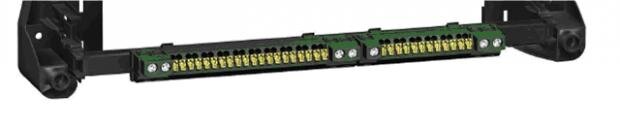
I fitted a dual rail Hager board a while back and the earth termination was done in a Wago style strip. Screw terminals for larger diameters but a nice neat row of push-fits for T&E sizes. Only pain was that you can't grip your crocodile clip onto the bar for testing as it's all plastic!

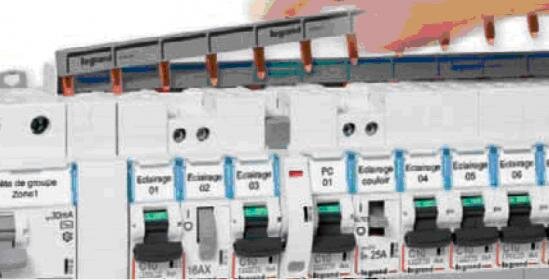
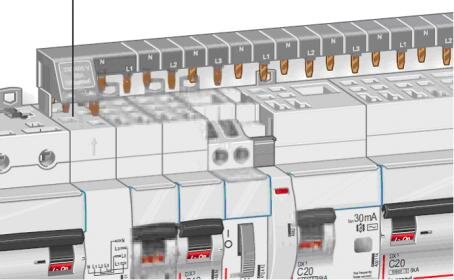
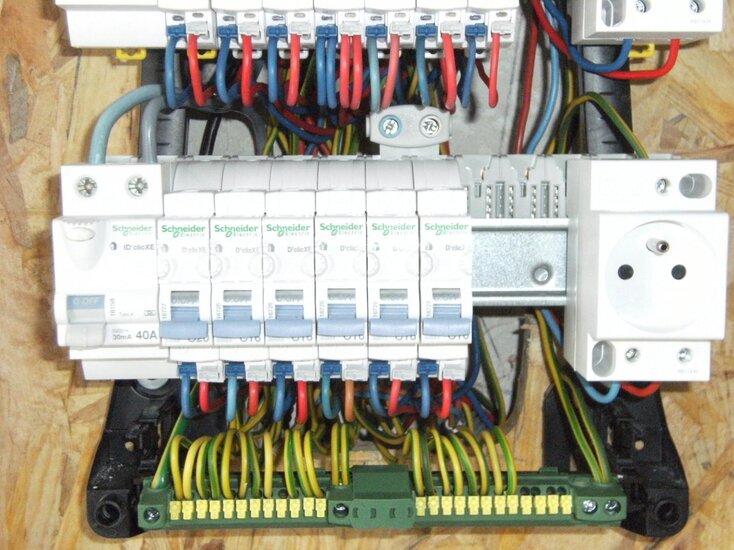
I've been using Legrand and Schneider push in range for the last 4 years, not sure if they do the same stuff in the UK

Legrand have 2 plugin bus bars at the top (L+N) and the breakers have push in connections (2*L 2*N)
They also do 3 phase bus bars
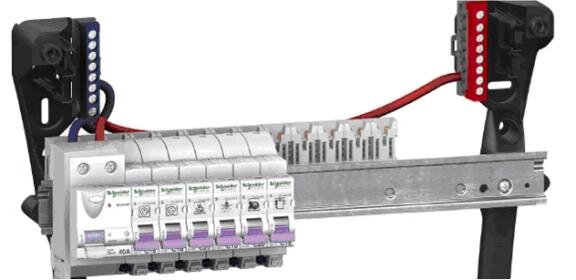
Schneider are even better as they have a back plate type bus bar where the RCD/breakers clip onto - changing a breaker takes about 5 second - again connection's are just push in

LEG-1.jpgLEG3.jpgSCH-Main.jpgSCH-Earth.jpg

Here's a actual installation pic
Dscf0227.jpg


Lee
 
I remember installing some French 3-phase 125A busbar systems several years ago and they were all connector type. If a machine needed isolating it was simply unplugged.
 
I installed a merlin / scnider ( spelling sorry ) panal board in a school for my old company, the mcbs in this board had torque nuts that snap off after the socket set has reached a certain amount of clicks, had to trust it but i feel happer knowing its tight myself.
 
I use an impact driver, just replace the amount of Nm with the same amount of impacts. You have to be able to count quickly though.
 
just bought a new wera torque driver from a well known auction website for £15, does up to 3.2N which is more than the recommended 2N. probably wont use it much but if any jobs worth is getting above themselves then i have the gear there. I do feel however its a bit overkill to torque them up.
 
I use a wiha torque driver with a mcb blade on Schneider boards all good ( I didn't buy it). Works well, I've got thermal images to prove it, the trouble is merlin recommend 3.5 , eaton 2.4 and as for wylex rcbos I've broken more than I've fitted. Wylex told me I'm over tightening.
Regs are regs.
 
The wera driver looks good. What will be the minimum and maximum torque setting needed for a full range of boards/breakers?
 
I've seen these on the web:

Thorsman Torque Setting VDE Screwdriver Set. Buy online or call

Slim selection set 10 pieces. Wiha 36078 in the Conrad online shop | 826459

and Weidmuller one that I can't find a supplier http://www.weidmuller.com/system/fi...dfs/literature/LIT5661460000_Tools_CAT6_F.pdf

Whilst I can understand paying out a lot of dosh for what some timed served bods seems unnecessary, they have been using torque spanners in the automotive industry for years, why shouldn’t we? I toured the BMW Mini factory recently, and they have systems in place measuring/checking the torque of screws fixing components inside the car, dashes for example. If the correct torque isn’t achieved an alarm is raised. If the fault isn’t rectified, the line will stop! Just for a dashboard.
:dizzy2:
We all know what loose connections can do. Isn’t this just a more precise/technical way of achieving this? When I was apprentice, the only testing equipment we were taught with, was a bulb test lamp and a Megger insulation resistance tester. Times have changed; perhaps we should all consider using a torque screwdriver, certainly for CU and its components?

I just got the Wiha 36078 slim set, and I have to say it is a high quality piece of kit. I use it mainly on consumer units. And was surprised by how little effort was required to tighten to manufactures levels. Seems I have been over tightening all these years!!!!
 
no torque driver will help when lazy installer forgots to tighten incomers properly...

got a nice colorful folder from elecsa by post today, advertising those and mentioning a lot of assesments and regulations....another scam by your scam provider.
 
I feel like a bit of a prat now, as I made a sarcastic comment the other day about buying a VDE torque screwdriver! I didn't know they EXISTED! It all sounded a bit too much like a joke!
 
no torque driver will help when lazy installer forgots to tighten incomers properly...

got a nice colorful folder from elecsa by post today, advertising those and mentioning a lot of assesments and regulations....another scam by your scam provider.

It's going to be the new "rule" soon I think. I did notice when installing something the other day that the torque settings were only "recommended".
 

OFFICIAL SPONSORS

Back
Top