Hi, I am writing in desperation as whilst I am a fellow engineer, I can only do mechanical and not electrical ! I wondered if anyone could help with a technical issue I am facing.

I want to control an extractor fan by water flow to the shower so that the extractor fan only runs when the shower is in use (the extractor also has a timed over-run which would be good to retain )

Do anyone know if it is possible to use an EHC flow sensor
EHC Shower Flow Sensor - https://www.electric-heatingcompany.co.uk/ehc-shower-flow-sensor-p129
to control the extractor fan?
Envirovent Silent 160 MV Ultra Quiet SILMV160/100T Compact Inline Fan | Extractor Fan World - https://www.extractorfanworld.co.uk/envirovent-silmv160100t-compact-inline-fan--timer-4367-p.asp
The extractor does NOT support volt free switching as far as I know.

I have looked into using a relay between the EHC flow sensor and the fan, and these components below have been suggested but whether it will work and how to wire them correctly is beyond me.


Finder Pluggable Module 95.05
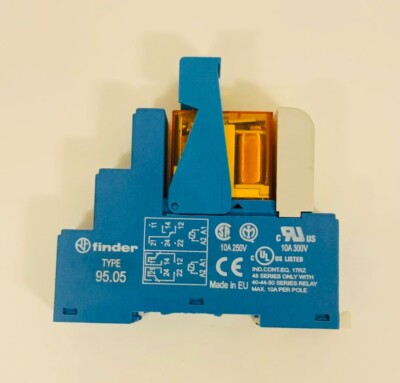
FINDER GENERAL PURPOSE PCB RELAY, 40 SERIES, POWER, DPDT, 24 VAC, 8 A


I have attached a very rough sketch of all the terminals I have so if anyone can tell me
a) If it will work
b) How to wire it up

I will gladly send you a case of beer

Is anyone able to help at all?

Many thanks

Matt
 
Voltage is not conducted, it is a measure of the electrical potential energy between two points.
Key aspects of conducted voltage
  • Source: Electronic circuits within a device create noise currents and voltages.
  • Path: This noise travels along power cords, signal cables, or data cables.
  • Measurement: It is measured using a specialized test setup, often involving a Line Impedance Stabilization Network (LISN), which presents a standard impedance to the device under test.
  • Purpose: The measurement is crucial for EMC certification, as it quantifies the noise a device sends back onto the power grid.
  • Types: Conducted noise can be either common mode (flowing in the same direction on both power lines) or differential mode (flowing in opposite directions).
  • Frequency: The typical frequency range of interest for these measurements is 150 kHz to 30 MHz.
  • Units: Results are expressed in decibels, such as dBµV (decibels referenced to 1 µV).
 
Either would work - unless you take very hot or very cold showers then both will have flow. But the hot will have flow first.
So either will work unless it doesn't.
Why would the hot flow first ? Or are you assuming that the op will have a thermostat type valve and not a direct mixer type one.
 
Lets clear up some confusion.
When people say "volt free contacts" they don't normally mean there's no voltage on the contacts. It means that in rhe absence of an external circuit & supply, there is no applied voltage on them.
So the light switch on the wall does qualify as volt free because the switch itself does not apply voltage to the circuit - that voltage comes from the circuit it's connected into.
View: https://www.youtube.com/watch?v=l0WDPzLMG9A
 
So either will work unless it doesn't.
Why would the hot flow first ? Or are you assuming that the op will have a thermostat type valve and not a direct mixer type one.

You put the flow switch in the hot because only the hot water will produce the steam and water vapour that needs to be extracted.

If only the cold is running then there's be no need for the extractor to be running.
 
You put the flow switch in the hot because only the hot water will produce the steam and water vapour that needs to be extracted.

If only the cold is running then there's be no need for the extractor to be running.
That was in relation to " The hot will have flow first. " But:

While cold water creates less steam than hot water, it still introduces moisture into the air, and a lack of ventilation can allow this moisture to build up and cause problems over time.
 
So either will work unless it doesn't.
It will work with one flow switch unless you do something that few (any) people actually do.
In general, it's not possible to use only hot water as that's too hot - so there will need to be at least some cold flow to make the shower usable. OK, there are probably exceptions, but I doubt they are common.
And I've never met anyone who admits to taking completely cold showers, or who has mentioned that they know anyone who does. I suppose there will be some, but again, not common. So in general, some flow in the hot line and so a single flow switch will work.

So the "unless it doesn't" will be corner cases and not very common.
Why would the hot flow first ? Or are you assuming that the op will have a thermostat type valve and not a direct mixer type one.
If you have a combi boiler then you'll have a thermostatic shower. Even if you have a hot cylinder (or thermal store), it's most likely that you will have a thermostatic valve. In this case, the hot water flows first - and the cold only follows once required when the hot is actually hot.

If you have a manual valve then probably both hot and cold will flow together - unless you turn the setting to hot first in order to get the hot water through first.

And that leaves, two-tap setups. It's a long time since I've seen one of those in use - and I hated them back then (even threatened to report a hotel for safety violations.) Those are even more likely to have "hot flow first" as people will tend to open the hot valve, and then progressively open the cold valve as the water gets hot.


Of course, putting a flow switch in both lines eliminates any of these situations. But sometimes that doesn't work - as in if your low entry shower is fitted by numpties.
 
It will work with one flow switch unless you do something that few (any) people actually do.
In general, it's not possible to use only hot water as that's too hot - so there will need to be at least some cold flow to make the shower usable. OK, there are probably exceptions, but I doubt they are common.
And I've never met anyone who admits to taking completely cold showers, or who has mentioned that they know anyone who does. I suppose there will be some, but again, not common. So in general, some flow in the hot line and so a single flow switch will work.

So the "unless it doesn't" will be corner cases and not very common.

If you have a combi boiler then you'll have a thermostatic shower. Even if you have a hot cylinder (or thermal store), it's most likely that you will have a thermostatic valve. In this case, the hot water flows first - and the cold only follows once required when the hot is actually hot.

If you have a manual valve then probably both hot and cold will flow together - unless you turn the setting to hot first in order to get the hot water through first.

And that leaves, two-tap setups. It's a long time since I've seen one of those in use - and I hated them back then (even threatened to report a hotel for safety violations.) Those are even more likely to have "hot flow first" as people will tend to open the hot valve, and then progressively open the cold valve as the water gets hot.


Of course, putting a flow switch in both lines eliminates any of these situations. But sometimes that doesn't work - as in if your low entry shower is fitted by numpties.
Or of course you could fit the flow sensor after the mixer
 
As I had not discovered easily incorporated flow sensors, I built an electronic controller that switches the extract fan when the water in the hot supply line is hot - probably around 40 to 45 degrees. The design was in a hobby magazine, temperature sensing is by an LM335, and works very well, avoiding the fan running when only lighting is needed..
 
Hi, I am writing in desperation as whilst I am a fellow engineer, I can only do mechanical and not electrical ! I wondered if anyone could help with a technical issue I am facing.

I want to control an extractor fan by water flow to the shower so that the extractor fan only runs when the shower is in use (the extractor also has a timed over-run which would be good to retain )

Do anyone know if it is possible to use an EHC flow sensor
EHC Shower Flow Sensor - https://www.electric-heatingcompany.co.uk/ehc-shower-flow-sensor-p129
to control the extractor fan?
Envirovent Silent 160 MV Ultra Quiet SILMV160/100T Compact Inline Fan | Extractor Fan World - https://www.extractorfanworld.co.uk/envirovent-silmv160100t-compact-inline-fan--timer-4367-p.asp
The extractor does NOT support volt free switching as far as I know.

I have looked into using a relay between the EHC flow sensor and the fan, and these components below have been suggested but whether it will work and how to wire them correctly is beyond me.


Finder Pluggable Module 95.05

FINDER GENERAL PURPOSE PCB RELAY, 40 SERIES, POWER, DPDT, 24 VAC, 8 A


I have attached a very rough sketch of all the terminals I have so if anyone can tell me
a) If it will work
b) How to wire it up

I will gladly send you a case of beer

Is anyone able to help at all?

Many thanks

Matt
Hi Matt, just as a matter of interest, why is a flow switch so important, bathroom fans also work for the removal of unwanted smells so you would want the fan to operate without a flow switch operating , I'm asking because I'm interested in your thought process
 
As I had not discovered easily incorporated flow sensors
A search for "flow switch 15mm" throws up plenty of options - including https://cpc.farnell.com/sensor-solutions-te-connectivity/fs-10/flow-switch-15mm-0-5l-min/dp/SN36477
I built an electronic controller that switches the extract fan when the water in the hot supply line is hot - probably around 40 to 45 degrees. The design was in a hobby magazine, temperature sensing is by an LM335, and works very well, avoiding the fan running when only lighting is needed..
I had considered a simple stat such as https://cpc.farnell.com/multicomp-p...itch-no-40-c/dp/SW07099?st=Thermal switch 35°
Might need to experiment with setpoint as the hysteresis is very high - 45/30 might work better.
We have these at church to turn on the fan-coil motors when the pipes get hot, and turn them off again when the pipes go cold.
 
Hi Matt, just as a matter of interest, why is a flow switch so important, bathroom fans also work for the removal of unwanted smells so you would want the fan to operate without a flow switch operating , I'm asking because I'm interested in your thought process
In our house, SWMBO often doesn't use the light, won't turn on the fan manually, so I've been thinking of either a flow switch or pipe stat so the fan can't be left off.
 

OFFICIAL SPONSORS

Back
Top