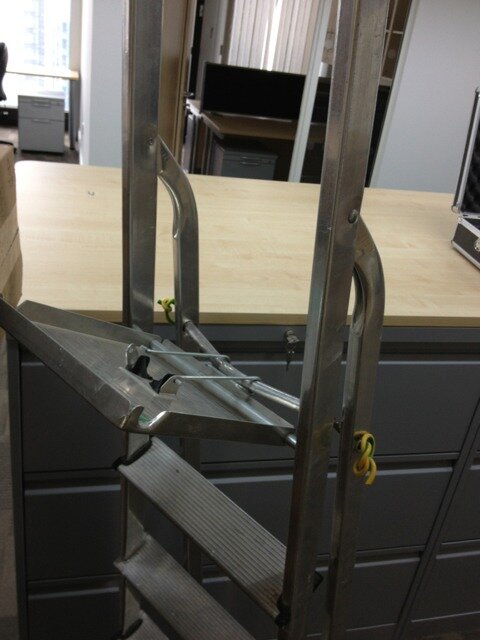
For reference, as I did a Harness/ restraint /Arrester course recently.

Restraints stop you getting into trouble, i.e keep you away from a roof edge.

Arresters break your fall, in the event of an unplanned downward decent, but you better have a rescue plan and team ready if you plan to use one.
 
I'm under the impression nower days that no ladder work to be under taken. Ladder for access only. Sizzor platforms, cherry pickers etc to be used. Years ago in a large church high roof, we would use a 16ft double extender ladder, separate the 2 ladders and place each ladder together at the top, forming a triangle. Man footing each ladder, electrician climbs 1 ladder to suspended light fittings! What would H & S say?
 
First of all, Im sorry to hear about the guy who broke his back.BUT...... what a load of Bull****.... Handrail steps, platforms, scaffolding, "no ladder work at all", Fall arrest etc, etc, etc.. Maybe I'm just old school, use your judgement, take risks if you have too, but way up the pros and cons. No wonder the country and our industry is in chaos, no wonder the youngsters have no common sense... they're not allowed to! We're in a trade... a building trade, its dangerous and risky, ACCIDENTS happen... GET OVER IT!All this crap just reassures me I'm better off as a sole trader, never employing again...
 
A few months ago I was on a site with a lad from the forum. The site was run by Strategic Group. They also had a "NO" ladder rule...we had to use mobile scaff etc....it was a right pain in the rear coz the false ceilings were sloped...so when we came to hang the light fittings, we had to keep making the platform higher and lower....would of taken half the time using steps!!!
 
A few months ago I was on a site with a lad from the forum. The site was run by Strategic Group. They also had a "NO" ladder rule...we had to use mobile scaff etc....it was a right pain in the rear coz the false ceilings were sloped...so when we came to hang the light fittings, we had to keep making the platform higher and lower....would of taken half the time using steps!!!

on a lot of our jobs they don't let you use steps at the start but they do at the end.

ive broken these rules etc a lot on site, its odd really not many firms would let you crawl along cable tray etc at height or ontop of trunking etc
 
Fall restraint gear is useless below a certain height.
You need space for the shock absorbing element in them to operate, before you hit the ground!
I'm familiar with this being an ex (haven't been for 2 years!) climber.
If you fall on a length of rope, rigidly fixed at one end, other end on you, the shock generated can seriously damage you.

Archy, you are describing two totally different systems and mixing them up.

Fall Restraint - Fixed lanyard to prevent falling completely (except perhaps on your face or arse) and is designed for use where edge protections systems are in place but would not prevent falling over the side and where fall restraint is deemed likely to be hazardous to the person using it or would introduce dangers to rescuers

Fall Arrest
- Fixed lanyard with a shock absorbing section designed to slow then arrest the fall of a person who falls off a gantry or other high work place but where rescue can be achieved within 20 minutes of incident..not recommended for edge protection on buildings, cliffs or where the fall height is less that the extended length of the lanyard.

Both types are to be used with the appropriate harness system, sized for the person using it who has been fully trained in their use.

For what it's worth, I am fully trained in the use of harnesses, ladder, scaffold, tower, mine, cliff and cave rescue as part of my work and as part of the 4x4 and Mountain rescue teams I volunteer for.
 

OFFICIAL SPONSORS

Back
Top