Greetings.

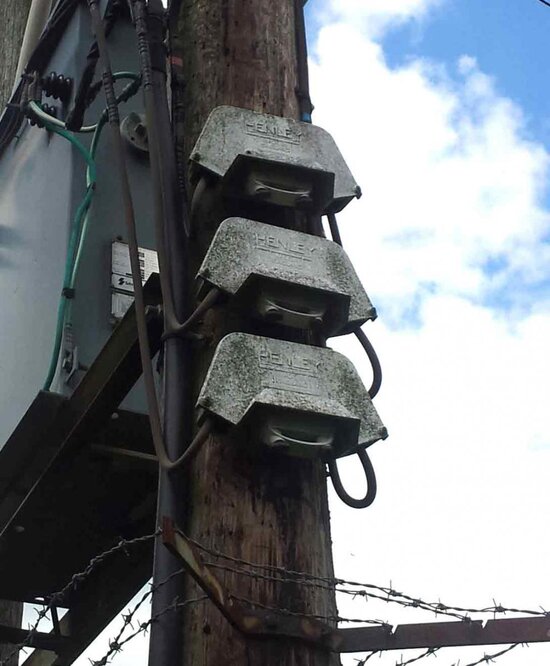
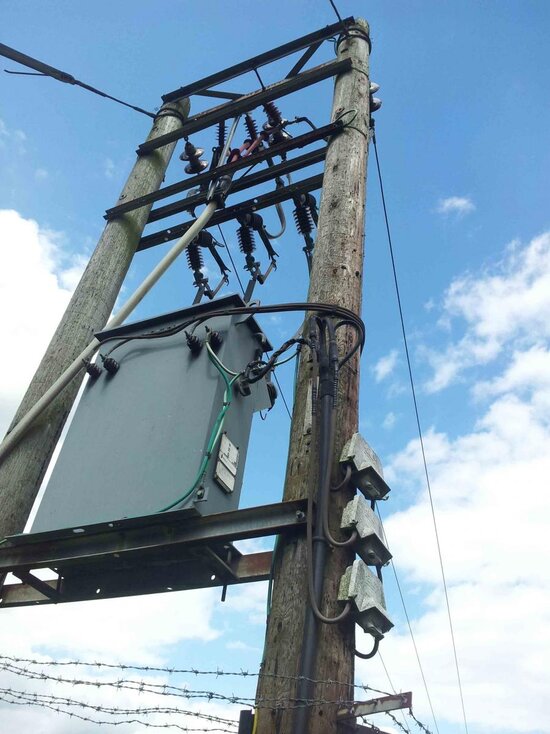
I took some pictures of our local transformer and was wondering what the Henly blocks on the side are for.

Are they some sort of overcurrent protective device, I didn't really want to have a poke about inside them :nono: so I thought I'd ask here.

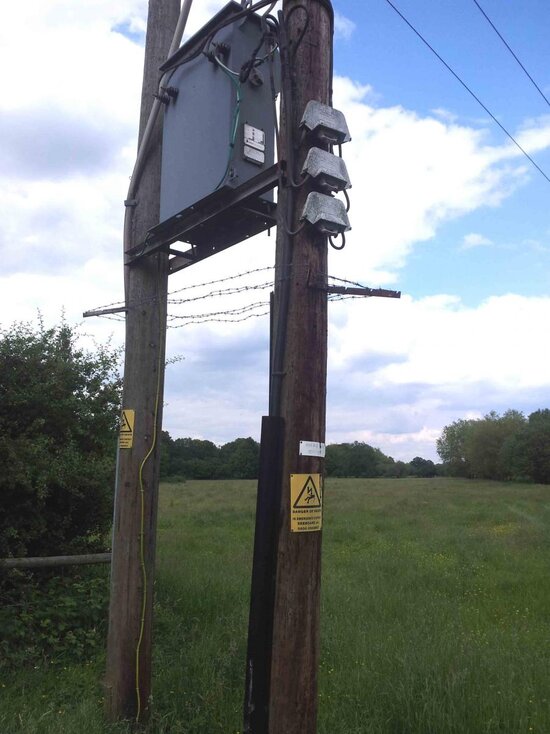
This is the supply transformer that supplies our house, TN-S system.

Thanks.
 

Attachments

  • A1.jpg
    A1.jpg
    117.3 KB · Views: 111
  • A2.jpg
    A2.jpg
    102.3 KB · Views: 93
  • A3.jpg
    A3.jpg
    132.9 KB · Views: 85
Pole Fuses...!! that is what the DNO have to replace when some numpty cut the cables or nick the cables!
 
DS beat me to it.


Ps, first time I've been able to post today, internet/forum problems???
 
normally 200A

Is that all?

Even though the supply cable is feeding a whole load of houses, that surprises me.

I'm not really sure how many houses that transformer feeds but 200 Amps seems quite low to me especially when each house has a 100 Amp fuse.

The supply cable we have is metal sheathed and travels underground, how do you think each individual supply cable to each house is joined onto the main supply cable, underground joint but what sort of joint?

It's a lead sheathed cable and I think the old oil soaked insulated type, quite fragile so I have been told.

The joints must be buried under the road somewhere, this is quite a rural area.
 
every house will not be at 100A... thats just generic lettering on side of the carrier...! pop it out and you will probably find 60A

200A x 3 = 600 A for a street is probably more than enough! diversity and other factors come in to play!


normally joined with a bit of connector block, a bin bag and loads of gaffa tape!!
 
Is that all?

Even though the supply cable is feeding a whole load of houses, that surprises me.

I'm not really sure how many houses that transformer feeds but 200 Amps seems quite low to me especially when each house has a 100 Amp fuse.

The supply cable we have is metal sheathed and travels underground, how do you think each individual supply cable to each house is joined onto the main supply cable, underground joint but what sort of joint?

It's a lead sheathed cable and I think the old oil soaked insulated type, quite fragile so I have been told.

Normally PILS cable, (paper insulated led sheathed) and its split underground using cast iron breech joints almost like t-pieces.

yeah 200a is about all on those poles, believe it or not the secondary side of the TX's in city centers are only backed with 800A fuses, and the HV primary are on auto reclose.
 
HV Auto reclose cause no end of problems at the site i work at!!!

it scrambled the PLC software with stop start signals as it went on and off 5 times in 15 seconds for the standby genny's so they never started and the UPS's went down ....
think it cost the client 800million in lost revenue and compensation.... it then cost the designers of the emergency support system an awful lot as well..

now the PLC has been simplified to if power goes off genny's start.... it now needs to be manually transferred back to grid supply
 
Auto Re close causes even more problems to ground workers!!!!, digger bucket/ pecker goes through duct and HV cable, bangs out the auto at the TX, all the grunts go and have a gander in the hole at what they have hit, Auto Re close comes back in about 15-20 seconds later and burns the eyebrows off them!
 

OFFICIAL SPONSORS

Back
Top