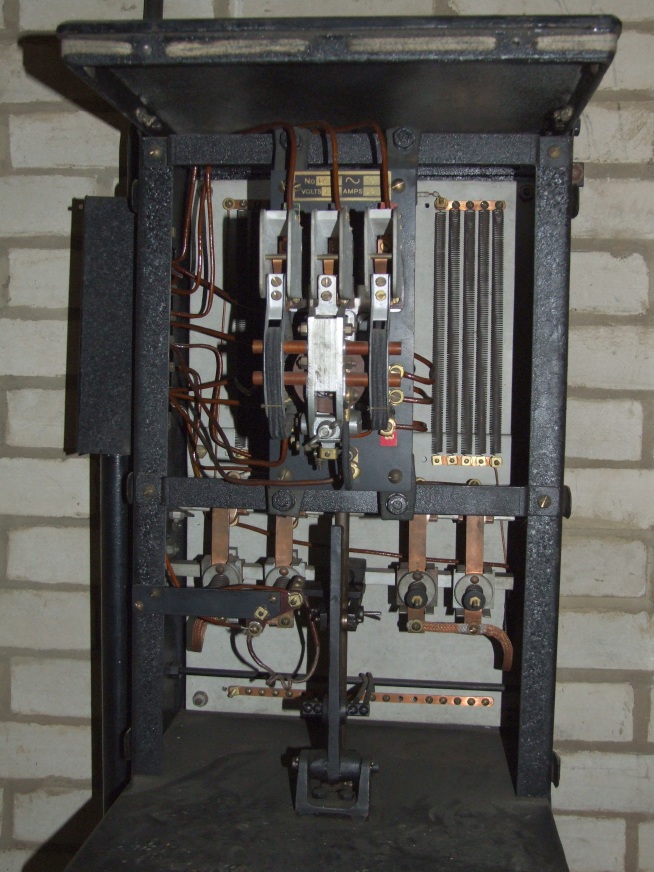
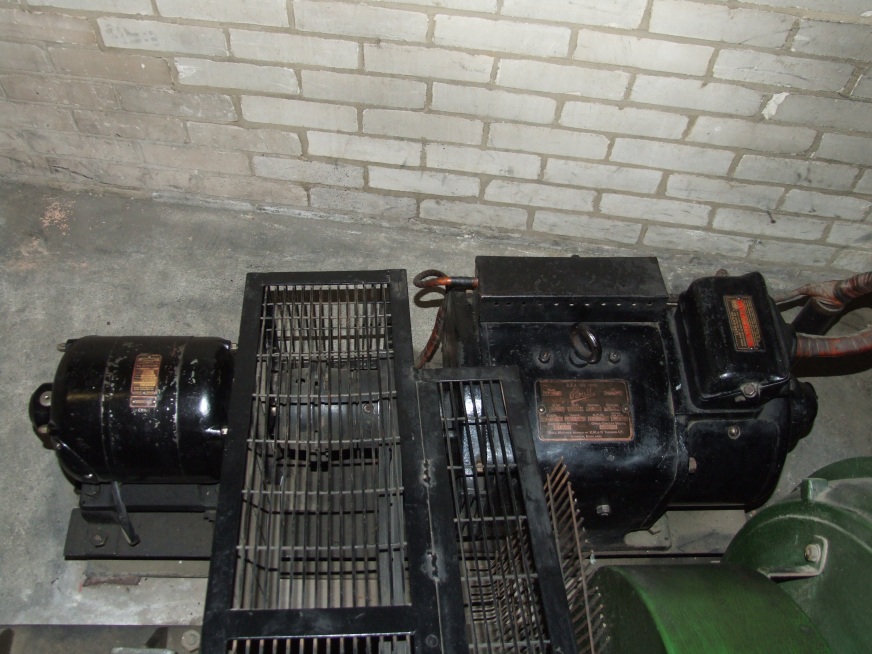
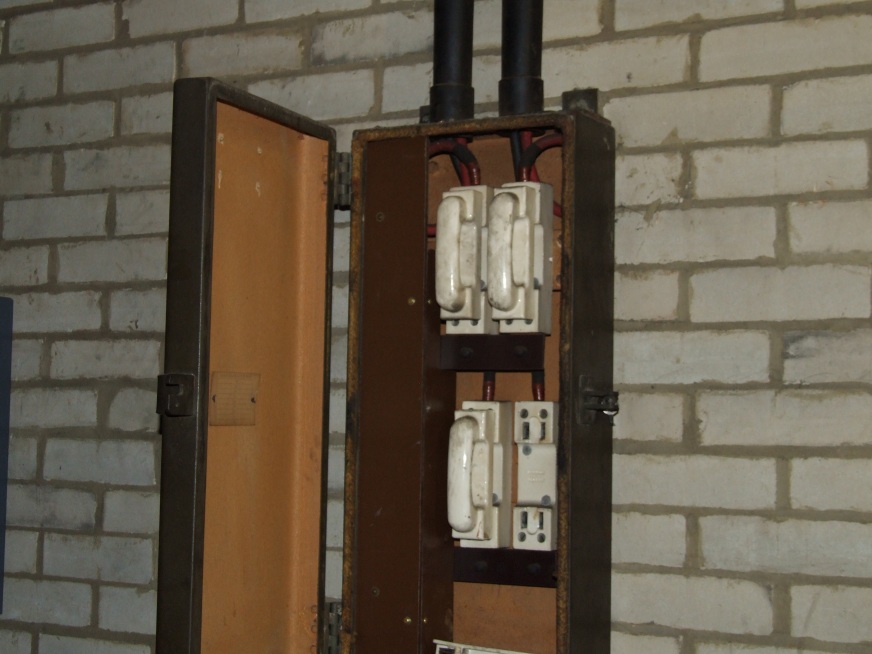
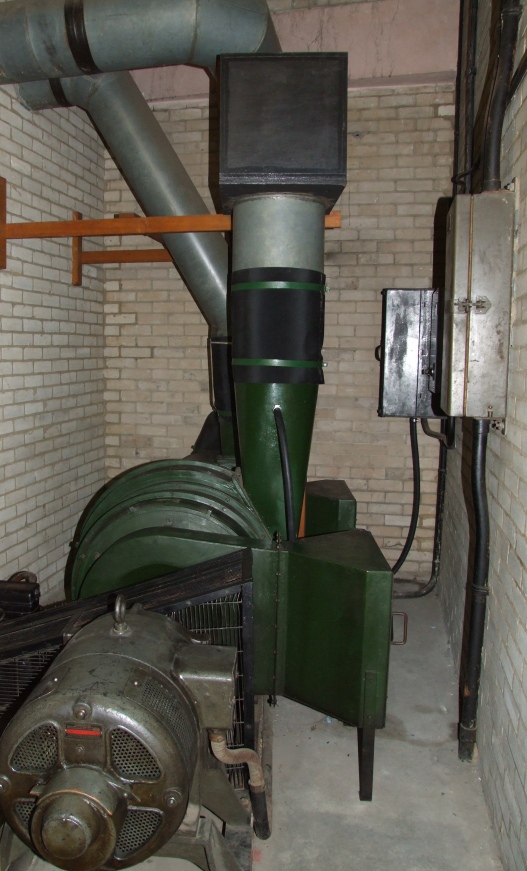
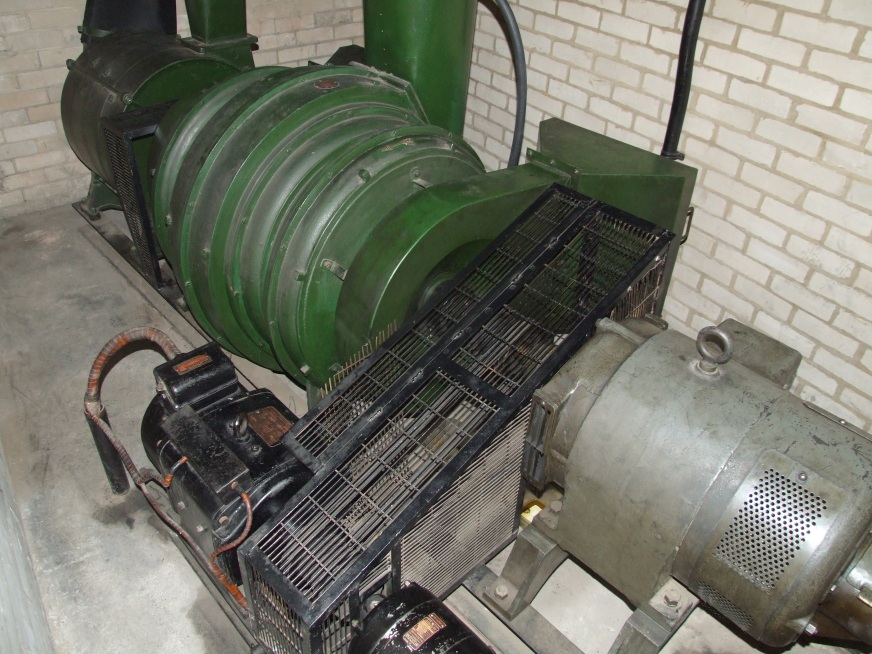
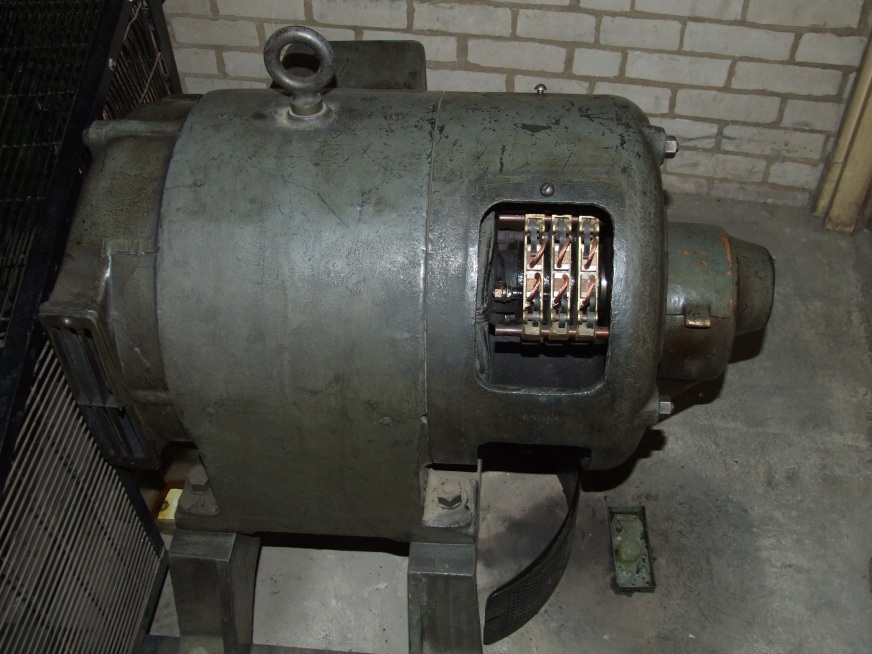
Here's another organy one. This blower dates from 1936-7 and is still in use in its original installation. Slipring 18hp motor with 3-stage pneumatic rotor starter, drives dual-inlet main blower and 4-stage booster. Also drives 18.5V 100A generator to power the electric action, with separate 12V 30A exciter. The generator is interesting - it's rated for 100A continuous load but peak currents can be much higher e.g. when changing a lot of stops at once. The 18V circuits are heavy (19/.064) but some sections are long and drop can be 10-20%. So the generator is over-compounded, i.e. the series field has enough turns to increase the generated EMF by more than its internal drop as the load increases. The output terminal voltage rises one volt per 40A load, i.e. the dynamic resistance is -0.025Ω (yes that's negative resistance) which approximately cancels out the drop in the DC distribution cables and submains.
2 View through door.jpg

3 Complete plant.jpg
9 Motor brushgear.jpg
11 Inside starter.jpg
12 Exciter and Generator.jpg
15 Action main fuses.jpg
 
Here's another organy one. This blower dates from 1936-7 and is still in use in its original installation. Slipring 18hp motor with 3-stage pneumatic rotor starter, drives dual-inlet main blower and 4-stage booster. Also drives 18.5V 100A generator to power the electric action, with separate 12V 30A exciter. The generator is interesting - it's rated for 100A continuous load but peak currents can be much higher e.g. when changing a lot of stops at once. The 18V circuits are heavy (19/.064) but some sections are long and drop can be 10-20%. So the generator is over-compounded, i.e. the series field has enough turns to increase the generated EMF by more than its internal drop as the load increases. The output terminal voltage rises one volt per 40A load, i.e. the dynamic resistance is -0.025Ω (yes that's negative resistance) which approximately cancels out the drop in the DC distribution cables and submains.
View attachment 33181
View attachment 33182 View attachment 33183 View attachment 33185 View attachment 33186 View attachment 33187

tasty...;)
 
Here's another organy one. This blower dates from 1936-7 and is still in use in its original installation. Slipring 18hp motor with 3-stage pneumatic rotor starter, drives dual-inlet main blower and 4-stage booster. Also drives 18.5V 100A generator to power the electric action, with separate 12V 30A exciter. The generator is interesting - it's rated for 100A continuous load but peak currents can be much higher e.g. when changing a lot of stops at once. The 18V circuits are heavy (19/.064) but some sections are long and drop can be 10-20%. So the generator is over-compounded, i.e. the series field has enough turns to increase the generated EMF by more than its internal drop as the load increases. The output terminal voltage rises one volt per 40A load, i.e. the dynamic resistance is -0.025Ω (yes that's negative resistance) which approximately cancels out the drop in the DC distribution cables and submains.
View attachment 33181
View attachment 33182 View attachment 33183 View attachment 33185 View attachment 33186 View attachment 33187
Excellent
 
It's interesting to think that at 80 years old, it has probably outlived all the men who designed, made and installed it, and provided no-one b***ers about with it there's every chance it will outlast not just us but the generation we hand it over to. Just needs a sip of oil and a turn of grease every 6 months (all the bearings are sleeve oil-ring types except one inside that is grease-lubricated as it's in the airflow) and the usual maintenance to brushgear. The generator tends to suffer from oil seepage onto the comm - we have to solvent-clean the brush holders, brushes and comm once a year or they stick and risk the output going intermittent which could be a showstopper. It could do with the armature out, comm skimmed, and a bigger flinger ring made for the comm end shaft. Maybe next decade.
 
Place I worked at once had a redundant very old hoist for lifting bales of wool

Went up in the rafters to have a look at it just to be nosy...like you does

Rotor were suspended on babitts..lol
 
Now there's an art - pouring and handscraping a bearing. How many mechanics even know what that is now?

You could use the shaft....to create the form for the babbit...

What you did...was cover the shaft with 'lamp black'....this stops the babbit from sticking

Once poured you then cleaned it all up then reassembled...spin it by hand...then disassemble... your looking for 'witness marks'...their the high spots.....which you shave down by hand...until true

A bit of marking blue tells if everything is OK and good to go....:)
 
Still got my scraper and engineers blue but carnt remember ever scraping a white metal bearing. Mainly brass bronze or cast iron.
 
Still got my scraper and engineers blue but carnt remember ever scraping a white metal bearing. Mainly brass bronze or cast iron.

Oillite bronze is still commonly used for wear faces....

Still a lot of gunmetal bearings about....
 
Around 40 years ago, just starting really in electrics, I worked on Craigdarroch house near Moniaive in Scotland. I believe that dates back to the 14th C.
 

OFFICIAL SPONSORS

Back
Top