J

JB8888

Hello all,

We have an electric shower in our bathroom. Since we have moved in I've noticed that when turning it on sometimes the lights in the flat (which are all on dimmers) reduce their output very slightly. My understanding is that this isnt completely abnormal but over the last few days I've noticed the slightest tingle in my finger when turning the shower on and off. Almost like a hardly noticeable pins and needles which lasts for a split second. Obviously this is a very mild electric shock.

No more showers until I get a professional out obviously but I just wondered if anyone could shed any light on what the issue might be and also just how dangerous is? Could it just be a static shock for example or it it definitely some kind of defect in the unit? I asked my wife and amazingly she said she's noticed it for ages but hasn't bothered mentioning it!

Any help or advice would be appreciated.

Thanks
 
Showers take a lot of power and so there is always some drop in supply voltage as a result. Typically you notice it more with the old filament lights than newer LED ones, and unless it is really noticeable then nothing to worry about.

However, evidence of electrical leakage causing a tingling sensation is definitely something to have investigated! It won't be static - that is a momentary jolt and is very uncommon in damp/humid environment, it is usually from nylon carpets in dry conditions (low relative humidity inside, so sometimes at worst in winter when inside it hot compared to outside, or summer if A/C is in use).

It could be a fault of the shower, or it could be a lack of bonding between your supply main earth terminal and the bathroom plumbing allowing a modest voltage to appear. Either way you are right to get a professional in to look at it.

Hopefully you can let us know how you get on with this.

Thanks so much for your reply. I will definitely contact a pro in the morning and avoid the shower for now.
 
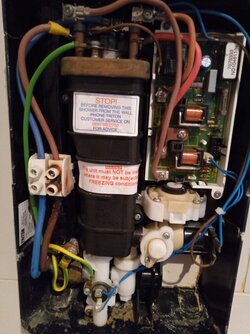
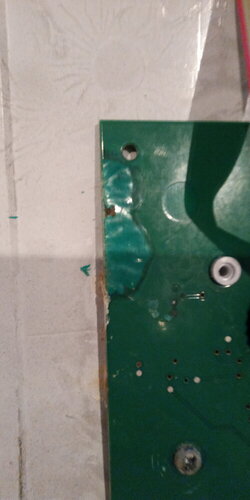
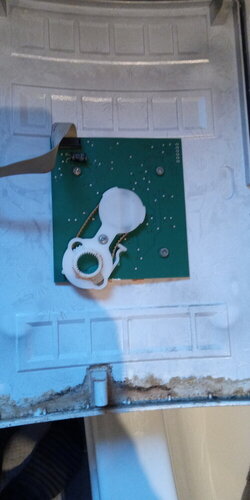
Quick update as electrician cancelled on me! I turned off the fuse and took the unit apart. There is a bit of sediment on the inside which I've cleaned out. There also looks to be stain on the circuit board which I think could be my problem as it directly backs onto the dodgy button on the outside of the unit. Could I attempt to dry this out or am I going to need a new unit? I'm booking a sparky to come and do a EICR regardless but am intrigued to know just how dangerous this might've been!
 

Attachments

  • IMG-20200927-WA0002.jpeg
    IMG-20200927-WA0002.jpeg
    70.3 KB · Views: 99
  • IMG-20200927-WA0004.jpeg
    IMG-20200927-WA0004.jpeg
    98.7 KB · Views: 102
  • IMG_20200927_180529.jpg
    IMG_20200927_180529.jpg
    129.3 KB · Views: 118
  • IMG_20200927_180536.jpg
    IMG_20200927_180536.jpg
    96.2 KB · Views: 110
  • IMG-20200927-WA0006.jpeg
    IMG-20200927-WA0006.jpeg
    61.3 KB · Views: 107
Quick update as electrician cancelled on me! I turned off the fuse and took the unit apart. There is a bit of sediment on the inside which I've cleaned out. There also looks to be stain on the circuit board which I think could be my problem as it directly backs onto the dodgy button on the outside of the unit. Could I attempt to dry this out or am I going to need a new unit? I'm booking a sparky to come and do a EICR regardless but am intrigued to know just how dangerous this might've been!
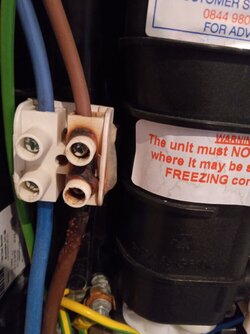
There appears to be heat damage, probably from a loose connection, on the line feed (brown) to the right of the two terminal blocks - If as appears, that has caused the cable some damage, then it will need reterminating and cutting back by an electrician before the shower is used again. Hard to say on the rest of the unit, though it looks like it's been on there a while, so may be sensible to consider a replacement.

Once you get any leaks into a unit like this, then it is likely to keep happening so replacing parts is probably a false economy.

If the circuit isn't already on an RCD then the new one should, but that's something to discuss with the electrician.
 
I would be inclined to fit a replacement, that has had some water get inside and there is heat damage to the terminals.

For the sake of it, fit a new one for peace of mind.
 
Any water/damp/sediment in the shower could explain things.

As mentioned above the overheating terminal is a concern and needs to be sorted out. At the very least a new block and cable correctly tightened after any damage cut-back. But probably better to replace it.
 
Thanks everyone. What a great resource this website is, I really appreciate the feedback. Discovered a crack in the top of unit when climbing up to put it back on which is obviously where water is getting in. It is on its own RCD and I turned it off at fuse box before dismantling. I will invest in a new shower. To clarify, could the potential cable damage/heat damage be caused by the water or are these 2 separate issues?
 
Not sure you need an EICR, the damage to the terminal block is as already said likely caused by a loose connection.
The 'sediment' could be caused by an internal leak or the shower head directed at the unit? and necessarily the cause of the electrical fault.
 
Thanks everyone. What a great resource this website is, I really appreciate the feedback. Discovered a crack in the top of unit when climbing up to put it back on which is obviously where water is getting in. It is on its own RCD and I turned it off at fuse box before dismantling. I will invest in a new shower. To clarify, could the potential cable damage/heat damage be caused by the water or are these 2 separate issues?
If it's only the brown cable that's damaged, which is how it appears from the picture, then that suggests loose connection, which would be unrelated to the water.

Though poor installation may be the common factor in both, if the cover was cracked when being screwed on originally.

Given that electric showers are often the biggest load on a domestic installation, I've often thought that they seem underdesigned to avoid dangers. But I'm sure the fact that manufacturers may be on the standards committe is completely unrelated to anything expensive being demanded.

Ironically enough, AFDDs might have detected this, but we won't be installing them on showers when they become compulsory in a few years!
 
Hello all,

We have an electric shower in our bathroom. Since we have moved in I've noticed that when turning it on sometimes the lights in the flat (which are all on dimmers) reduce their output very slightly. My understanding is that this isnt completely abnormal but over the last few days I've noticed the slightest tingle in my finger when turning the shower on and off. Almost like a hardly noticeable pins and needles which lasts for a split second. Obviously this is a very mild electric shock.

No more showers until I get a professional out obviously but I just wondered if anyone could shed any light on what the issue might be and also just how dangerous is? Could it just be a static shock for example or it it definitely some kind of defect in the unit? I asked my wife and amazingly she said she's noticed it for ages but hasn't bothered mentioning it!

Any help or advice would be appreciated.

Thanks
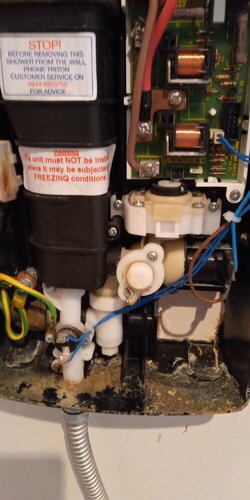
Looks like the Live side has been getting over heated/
 
Moisture inside the case could cause corrosion of the terminal and/or the cable end. This could help to create a “hot” joint.
 
Not sure you need an EICR, the damage to the terminal block is as already said likely caused by a loose connection.
The 'sediment' could be caused by an internal leak or the shower head directed at the unit? and necessarily the cause of the electrical fault.
We're expecting our first baby in December and only got a basic home buyers survey when we moved last year so would like an EICR for peace of the mind. The shower has made me paranoid! Thanks for your help mate
 
We're expecting our first baby in December and only got a basic home buyers survey when we moved last year so would like an EICR for peace of the mind. The shower has made me paranoid! Thanks for your help mate
Ah ok, thought you meant just for the shower?
 

OFFICIAL SPONSORS

Back
Top