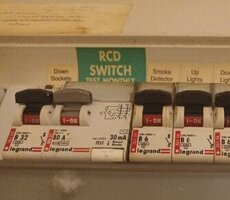
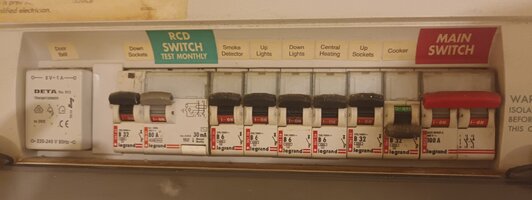
Hi, DIY'er here. I'Ve purchased new oven which is 2.4kw. Comes with a plug fitted with 13amp fuse. Previous was hardwired into an unswitched fused spur which had a 13amp fuse in. There is a red isolator switch above worktop. It's a dedicated cooker circuit with nothing else on it. Circuit has B32 breaker on consumer unit. Can I just replace the unswitched fused spur with an unswitched single socket to plug in new oven? Or alternatively, the cable from old oven is still attached to fused spur...could I attach single socket to that to plug in oven or would it be an issue having fuse in plug and fuse in spur. Is one way better than the other. Thank you.
 
In a word, yes and no.... Yes you can swap to a 13a socket outlet because the manufacturers fitted plug still has a 13a fuse in it, so there's the protection. No, because an argument could be made that there's insufficient protection from a B32 to a single 13A socket (usually nominally rated at around 19A), irrespective of what's plugged into it, and cable sizing (would need to be at least 4mm) effects that also. A way around both the above would be to swap the B32 for a B20 - however - it could then be argued that you've fundamentally changed the characteristics of a circuit which then makes it a notifiable work.

Choice is yours, but I wouldn't sweat it either way.
It has a 13A plug fitted.
 
Thanks for your replies. So if I change the fused spur to a standard single unswitched socket and downgrade the breaker on the consumer unit to a B16, does that sound like a reasonable course of action?
 
There is a RCD Switch on consumer unit which states 30mA on right hand side. That what you mean? Thanks again.
 

Attachments

  • 20261124_190239.jpg
    20261124_190239.jpg
    902 KB · Views: 3
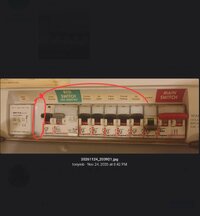
No it isn't protected by the RCD. There may be a spare where I have circled where you could move it to but unless you are competent in doing this safely you will need an electrician. Screenshot_20261124_205352_Chrome.jpg
 
Ah ok, thanks. Wouldn't know where to start with doing that. There are sockets with built in RCD protection but as it'd be behind oven i'd never be able to test. Oven says can be plugged into any socket so may look at getting new socket put in off 'regular' kitchen sockets. Flex on new oven isn't long enough to reach any of the existing other sockets. Will get someone in. Appreciate your advice, cheers.
 
@EFBot explain this thread

AI-generated reply. more info

This thread is about how to connect a new electric oven safely and legally, not just how to make it “work”.

Here’s what’s going on, step by step:
  • Existing cooker circuit vs RCD protection
  • The OP already has a dedicated cooker circuit/breaker in the consumer unit (fuse box) that fed the old hard‑wired oven.
  • Another member spots that this cooker circuit is not on the RCD (residual current device) side of the board. RCDs are what protect you from electric shock and are required on most new/altered circuits.
  • Why the RCD question matters
  • The helper is asking “does that RCD actually protect the oven circuit?”, because having a modern oven on a circuit without RCD protection is generally not up to current standards and could be unsafe in a fault.
  • From the wider photo, they conclude: no, the cooker MCB isn’t RCD‑protected.
  • Possible solution and limitations
  • They note there might be a spare RCD way where the cooker circuit could be moved, but:
  • That’s work inside the consumer unit.
  • It needs someone who is competent and, in practice, a qualified electrician.
  • The OP admits they have no idea how to do that and sensibly backs away from DIY in the CU.
  • OP’s thoughts about alternatives
  • The new oven comes with a plug and says it can go into a normal socket.
  • The OP wonders about:
  • Using an RCD‑protected socket instead (but it would be hidden behind the built‑in oven, so they couldn’t test/reset it easily).
  • Getting a new ordinary socket spurred/taken from the existing kitchen socket circuit, which is RCD‑protected, and just plugging the oven in there.
  • They plan to get an electrician in to do this.
  • Big picture
  • The thread isn’t about whether the oven can electrically run from that point (it can), but whether the circuit has proper modern safety (RCD) and how to achieve that.
  • Consensus is: moving/altering circuits at the consumer unit is not DIY territory; best route is to have an electrician either:
  • Put the cooker circuit on RCD protection, or
  • Install a suitable RCD‑protected socket for the plug‑in oven.

If you want, you can ask me to summarise the pros/cons of leaving it on the cooker circuit vs putting in a new socket.
 

OFFICIAL SPONSORS

Back
Top