pc1966

Esteemed
Arms
A recent thread was discussing having a delay RCD (type A or AC) for TT before a garage CU with a type B RCD for an EV charger. The question was would this be OK or not? Standard advice is the type B should be direct off supply (possible problem for TT) or fed from another delay type B (at eye-watering expense). But just how sensitive are type A RCD to a small DC component, below the type B trip point, in practice?

So from the department of "don't try this at home girls & boys" I bring you some test results based on this set-up:
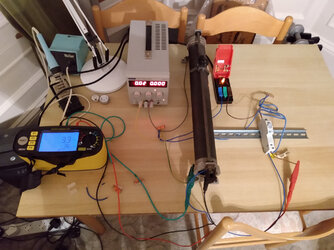
RCD-DC-test.jpg
Test devices are unused, a year old Hager ADA106U RCBO, and a many years old PowerBreaker H92MPS RCD-FCU. The big potentiometer served to provide a resistance for the current-limited PSU to reliably run at constant current when the RCD was closed, and a path for any mains test current when the RCD opened so it would not be totally forced back through the DC PSU. For testing at home (TN-C-S with RCBOs) I used a simulated TN-C-S test rig so the PSU negative and the MFT earth both go to the pre-RCD mains neutral.

Basically I force DC through the neutral path of the RCD while doing normal MFT tests.

TL;DR Testing RCD to DC effects
 
Last edited:
Results for the Hager RCBO:
DC current (A)​
In/0 (ms)​
In/180​
5In/0​
5In/180​
Ramp/0 (mA)​
Ramp 180​
0.0​
9​
19​
9​
19​
24​
24​
​
9​
19​
9​
20​
24​
24​
​
9​
19​
9​
19​
24​
24​
​
​
​
​
​
​
​
0.1​
9​
19​
9​
19​
21​
24​
​
9​
19​
9​
19​
21​
24​
​
9​
19​
9​
19​
21​
24​
​
​
​
​
​
​
​
0.2​
28​
18​
9​
19​
24​
24​
​
30​
18​
9​
19​
24​
27​
​
28​
18​
9​
19​
24​
24​
​
​
​
​
​
​
​
0.3​
28​
18​
9​
19​
27​
30​
​
28​
18​
9​
19​
27​
30​
​
28​
18​
9​
19​
27​
30​
​
​
​
​
​
​
​
0.4​
Fail​
Fail​
9​
19​
33​
33​
​
Fail​
Fail​
9​
19​
33​
33​
​
Fail​
Fail​
9​
19​
33​
Fail​
 
Results for the PowerBreaker RCD-FCU
DC current (A)​
In/0 (ms)​
In/180​
5In/0​
5In/180​
Ramp/0 (mA)​
Ramp 180​
0.0​
9​
18​
9​
19​
21​
21​
​
9​
18​
9​
19​
21​
21​
​
9​
18​
9​
19​
21​
21​
​
​
​
​
​
​
​
0.1​
9​
19​
9​
18​
24​
24​
​
10​
19​
9​
18​
24​
24​
​
9​
18​
9​
18​
24​
24​
​
​
​
​
​
​
​
0.2​
28​
19​
9​
18​
33​
33​
​
28​
99​
9​
18​
33​
33​
​
49​
239​
9​
18​
33​
33​
​
​
​
​
​
​
​
0.3​
Fail​
Fail​
9​
18​
Fail​
Fail​
​
Fail​
Fail​
9​
18​
Fail​
Fail​
​
Fail​
Fail​
9​
18​
Fail​
Fail​
 
The conclusion? Well for the devices tested (both claim to be type A) there is:
  • Negligible change at 100mA of DC (well above a EV's 30mA type B RCD trip current)
  • Some obvious degradation of characteristics at 200mA
  • By 300-400mA they are failing to trip at the 30mA threshold for "additional protection"
Over to the sparkys of this forum for comments!
 
@pc1966 do you have any type AC devices to compare against?

So from how I read it even type A devices here are being paralyzed by DC beyond a few mA?
 
300 IS JUST A FEW
My phone charger is 5000mA

If a fault made it push that into mains then many rcd would fail to work
 
@pc1966 do you have any type AC devices to compare against?
Unfortunately the only two RCD I had lying around were those two tested. Having something like a 100mA AC delay RCD would have been perfect but a bit much to spend £50+ out of curiosity!
So from how I read it even type A devices here are being paralyzed by DC beyond a few mA?
I suspect it is what the standard calls for (sort of "must work up to 6mA DC" requirement) and not what is actually achieved. When I did the tests it was using the AC waveform for a 30mA RCD on top of the DC bias. The "fail" was it not meeting the corresponding test limits of my DiLOG MFT.

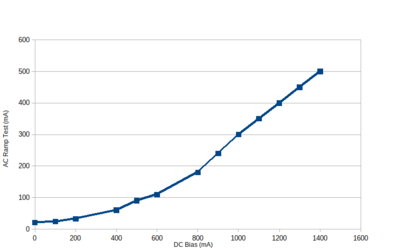
Going beyond the 30mA spec and testing with my MFT set for 100/300/500mA RCD types' ramp tests I got this for the PowerBreaker RCD-FCU (was still on test rig this morning):
1615366322436.png
 
Last edited:
you must have some phone to have a 5 amp charger ! ,its hard to consider a fault that could transfer that extra low voltage DC on to the mains without the mains being connected to the DC output , these things have areas of separation on the circuit board , sometimes with air gaps to prevent this.
 
That graph is kind of what I would expect, that as long as you fault AC current is enough to drive the differential sense transformer back against the DC bias to get the "30mA" trip threshold in the secondary it will always fire.

So "blinded" is not quite right word, desensitised is more appropriate.
 

OFFICIAL SPONSORS

Back
Top