J

James1985

When we use 1 phase, L1 or L2 or L3 - we get 240V
When we use 2 phases, L1 & L2, or L1 & L3, or L2 & L3 - we get 400v.
When we use 3 phases, L1 & L2 & L3 - we get 240v?
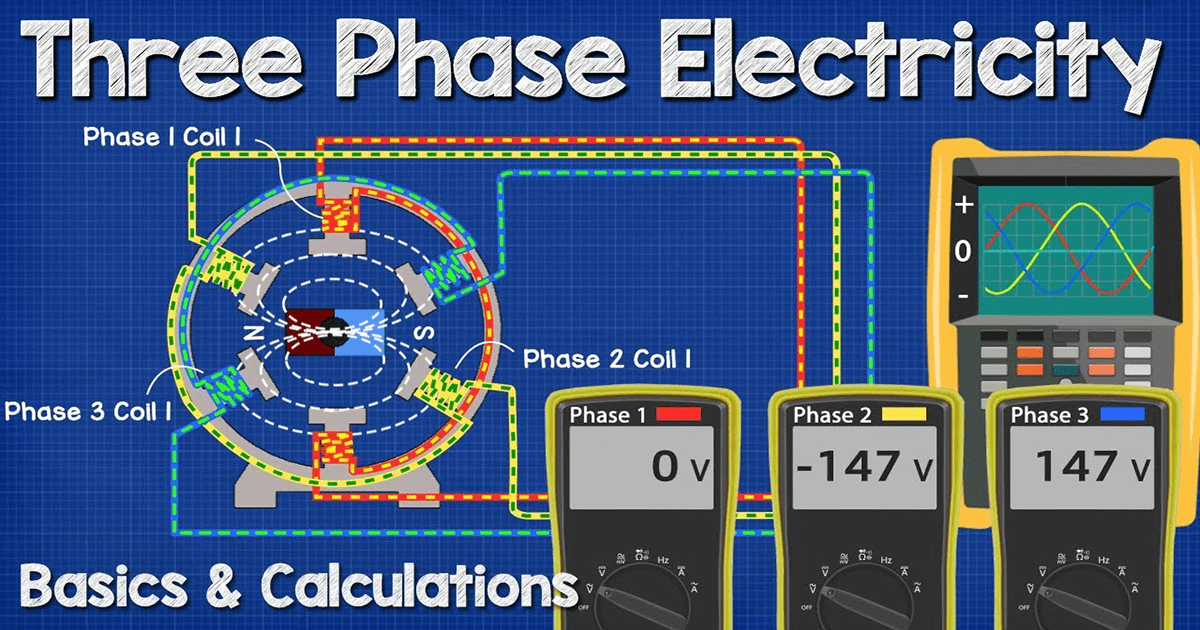
 
If you look at the example drawing of a star-connected generator and treat it literally as a Y and then consider them linked by a triangle (Delta) you see the lengths match the ratios.

So the 3 legs of the Y are 230V in length.

The 3 links of the delta are 400V in length.

Ratio of the two is sqrt(3) (yes, that is not exactly the "nominal" 400/230 ratio, but folks like nice round human numbers!)

You can think of the neutral as the centre of the Y that is the stationary axel of a wheel, then it has 3 points for the 3 phases that are rotating, each tracing out a sine wave in time as it rises and falls, but with the 120 deg difference in phase between each point from being 1/3 of a 360 deg circle apart.
 
When we use 1 phase, L1 or L2 or L3 - we get 240V
When we use 2 phases, L1 & L2, or L1 & L3, or L2 & L3 - we get 400v.
When we use 3 phases, L1 & L2 & L3 - we get 240v?
The only thing I'd add to the excellent answers you already have is that adding "between X and Y" to your descriptions and including Neutral might increase the clarity a bit.
The last statement is actually slightly ambiguous and if involving Neutral is the same as the first statement.
 

OFFICIAL SPONSORS

Back
Top