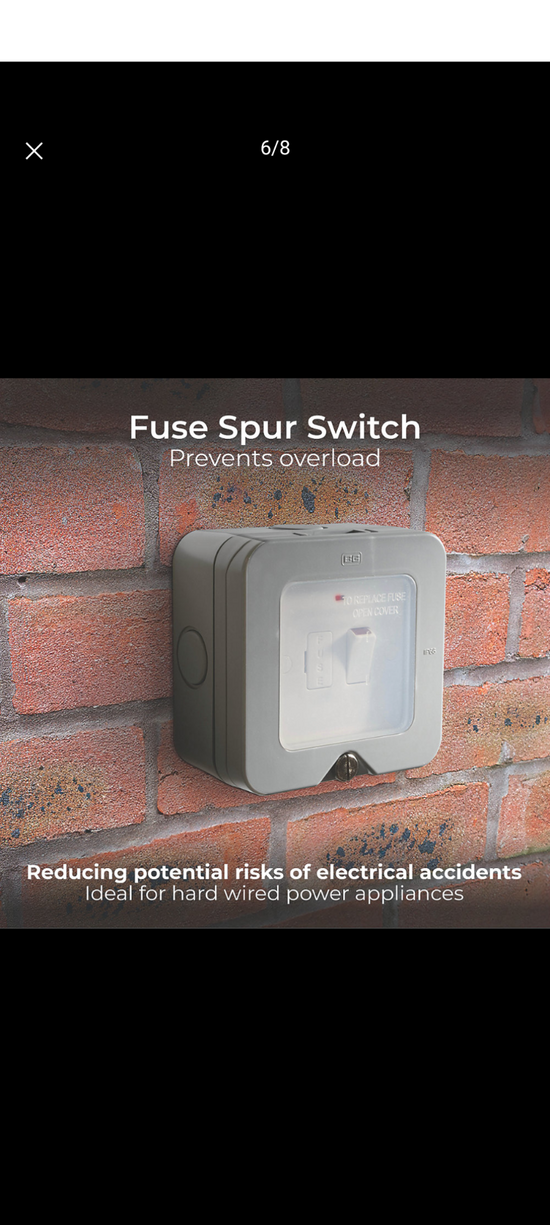
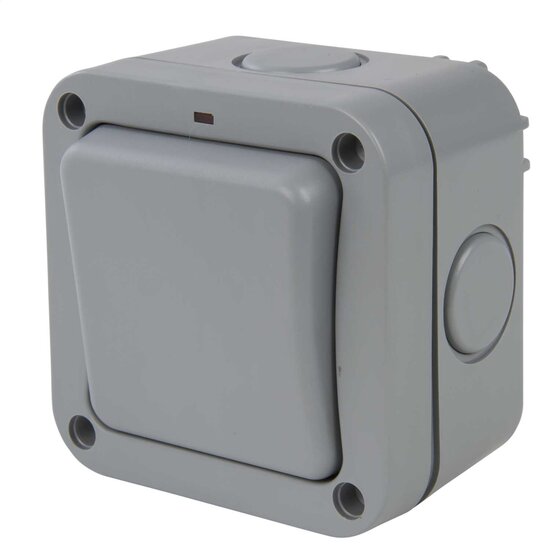
You should really have a dp switch so that you can isolate the light/sensor in case of a fault.
Thanks mainline, I appreciate that point and did think about that but I need to have minimal disruption to the house though really as it's been recently renovated (by old owners) so don't want to be making a mess, can't I just isolate at the board for any maintenance? I was also going to add a sticker or something saying "fed from hall pendant" or something along those lines to save future confusion.
 
Thanks mainline, I appreciate that point and did think about that but I need to have minimal disruption to the house though really as it's been recently renovated (by old owners) so don't want to be making a mess, can't I just isolate at the board for any maintenance?

Yes, but what would happen if the sensor/light fitting had a fault and tripped the RCD and in turn losing the house lights.
 
Yes, but what would happen if the sensor/light fitting had a fault and tripped the RCD and in turn losing the house lights.
Yes true, instead of a wiska box could that be a fused connection unit? So any fault would be stopped there before reaching the main RCD? Am I right in thinking that would be the case or am I simplifying that too much?
 
Yes true, instead of a wiska box could that be a fused connection unit? So any fault would be stopped there before reaching the main RCD? Am I right in thinking that would be the case or am I simplifying that too much?
You could have an outside enclosure switch box instead of a wiska box.
 
It is not a requirement to fit an isolator although some may do it.
 
The reason some fit double pole isolation for external lighting is to isolate it should a fault give rise to the RCD tripping. External lighting can be prone to water ingress which can trip an RCD, it will not be sufficient a fault to rupture a fuse in the spur. Fitting an external switch would be just as prone to ingress leaving you in the same boat.
 
Yeah I've seen those, but without that fuse would the fault current bypass the DP Switch back into the house circuit anyway?

The fuse or switch isn't going to stop the rcd tripping in the case of an earth fault.

But having the switch means that the sensor/light can be easily isolated so that the house lighting can be reinstated.

Although not a requirement, it would be good practice to do so.

There are no real arguments for not doing so apart from cost which in this case is about £5.
 
The fuse or switch isn't going to stop the rcd tripping in the case of an earth fault.

But having the switch means that the sensor/light can be easily isolated so that the house lighting can be reinstated.

Although not a requirement, it would be good practice to do so.

There are no real arguments for not doing so apart from cost.
The reason some fit double pole isolation for external lighting is to isolate it should a fault give rise to the RCD tripping. External lighting can be prone to water ingress which can trip an RCD, it will not be sufficient a fault to rupture a fuse in the spur. Fitting an external switch would be just as prone to ingress leaving you in the same boat.
Okay. I understand that now, I appreciate your time and patience 😅
So just for clarification I'll run the single T+E cable from the loop terminal in the ceiling rose into a DP Switch and then the flex from the DP Switch to the sensor light and that's job done? 👍
 
I would not use an external switch it gives you a double chance for water ingress.
 

OFFICIAL SPONSORS

Back
Top