M

Mustafa Mohd.

Good Day to Everyone,

I have a doubt that google has not been very helpful because I do not know the 'right terms' to be googling for.

Ceramic Bushings that are used for transformers have a structure similiar to the ones shown here
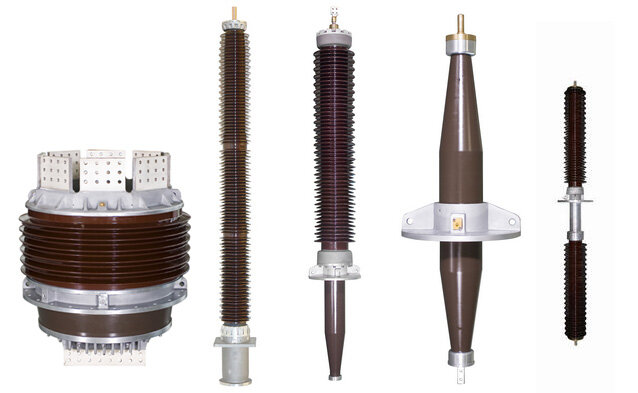
Typical_bushin_designs.jpg (Openelectrical.org)

I noticed all ceramic bushings have the same typical outer construction feature - 'Narrow - Wide - Narrow - Wide' . I would like to know if there is a reason for this construction feature .

Thank You.

Ps- Im new here, Im not sure if this is the right sub category to be posting this :)!
 
This design is for a few reasons, the main ones being the breaking up of Electrical Corona bridging and also to prevent Electrical conduction by water (or other liquids) that may cause the insulator to become electrically conductive,for example if rain water was to wet the insulator this may create an electrically conductive film, this would cause the transmission of Electricity to the metal housing (case) of the transformer creating fault currents and affecting protection equipment and would also cause Energy waste if protection equipment(breakers) were not to operate...

This design (shape) of insulator bushing helps to prevent a film of conductive liquid from completing (bridging/closing) by creating dry gaps (free air) as well as increasing the surface area between wet surfaces on the insulator.....
In an upright (standing up) orientation/position any non viscose (thin) liquid such as water will run off/drain away by falling/flowing over the edge of each segment/section of insulator just like the edge of a Building roof...

The longer/bigger the insulator on/around the bushing the higher the Voltage it can insulate against...

factors affecting the insulator bushing requirements/design can include:

the climate of the country/location where it is to be installed..

the operating voltage of the transmission supply entering the transformer...

and the frequency of the mains supply...

In various different countries the Electricity supply companies also install protective covers/shrouds around these in addition to extra insulation sleeves on the cables entering the transformer via the bushings, this is to prevent damage to the transformer and supply by wildlife (Animals/Fauna) as well as to protect some wild animals from being harmed (in some countries this is an animal protection law) by climbing on or attempting to sleep on the Transformer or Electricity poles/pylons ...


Google : Raptor Gaurd

Also have a look at a company in the USA (which I have dealt with before) called : Salisbury Electrical (WH Salisbury) you will find this on Google....

They have information PDF's available to download on Transformer Bushings and cable/bushing protection equipment/shrouds/covers...

I have a contact in the USA that can send me printed material and information Catalogues if you need them, I can forward them onto you wherever you are by mail...
 
The "Narrow Wide Narrow Wide" shape also prevents heat from building up by (A) acting as a radiator for the conductor inside the bushing, and heat convecting from the transformer windings/oil and (B) prevents heat building up from water arcing/shorting on the surface, as if a wet surface were to cause bridging/conductivity, this would heat up and evapourate...

The Bushings also protect against Ice Film build up in cold climates, which would also conduct electricity...


hope this helps ...
 
Also google : Electricity Bird Flappers

These are manufactured in South Africa and are for fixing/fastening to power lines/cables to prevent Birds from Flying into them, such as Geese, Swans, Herons, Storks,Eagles and other large birds with big wing spans/sizes...

they are commonly used in the UK and USA as well as in African countries and parts of Germany...


they are rotating small rigid Orange plastic flags, or small mirrored (reflective) metal disks which spin/rotate in the wind and can be easily seen by flying birds that then avoid them....whereas cables without them may be hidden by mist/fog or heavy rain when most birds are actively flying during daylight...
 
The Bird Flapper power line flags are attached to high voltage pylons by maintenance teams during power down or while working from safety maintenance cradles on live Pylons....

the Bird Flappers that are fixed onto lower voltage supply lines such as 11,000 volt (11KV) and 33,000 volt (33KV) lines that are suspended on low ground clearance poles/pylons (mainly wooden posts) are fixed using non conducting (insulating) "Hot Stick" poles with a special attachment on the end, note that this is only done on dry sunny days as it is not safe to do this on wet/rainy days as the water will make the safety insulated working pole (Hot Stick) that is designed for live working become conductive and dangerous....

These Hot stick working tools (manufactured from a special blend of glass fibres) are usually Yellow in colour...
 
sorry for the delay in posting this, where I am staying just now is very prone to sudden bursts of very high (70mph+) wind without warning and different to the tv weather forecasts, these appear in seconds and last for 30mins or an hour then stop just as suddenly, and the phone cable coming into the building shakes violently like a guitar string, leaving me with no phone and no internet until it stops, I would say its a loose cable but the wind is so violent that I don't think anything other than burying the cable would help....and the phone company aint going to do that.....
 
Last edited by a moderator:
You working on commission? I was impressed with you’re answer until I got to the adverts for unrelated items.

It would help the OP if he Google’s capacitive bushing


MV and HV insulators which by the way are always circular, are basically shaped this way to maximize the surface path length which minimizes surface leakage and corona, which would otherwise lead to arcing from exposure to year-round weather conditions, dust, air pollution etc. In Dry dusty countries, such as in the Middle East with little rainfall, the larger external transformers and pylon insulators need to be washed/cleaned by a high pressure water washing technique using demineralised/distilled water.... And generally, this will be live line washing too ..lol!!!


Watched them spray cleaning insulators in Draklow power stations switch yard. Rotten sods wouldn't let me have a go!
 
Watched them spray cleaning insulators in Draklow power stations switch yard. Rotten sods wouldn't let me have a go!

I had a go in Libya, ...Sat on top of that Stainless Steel washing tanker vehicle, and aiming the nozzle up at a pylon carrying 66KV for the first time, can be a little daunting to pull that lever to release that high pressure water.... Fun after you've done it once or twice though!! lol!!
 
I had a go in Libya, ...Sat on top of that Stainless Steel washing tanker vehicle, and aiming the nozzle up at a pylon carrying 66KV for the first time, can be a little daunting to pull that lever to release that high pressure water.... Fun after you've done it once or twice though!! lol!!

wouldn't say too much, somebody I worked with got a knock on the door for speaking about working there, also got barred from working in certain companies over here...
Another person I worked beside used to work there in the 1980's.....he took it off of his CV...
 
You working on commission? I was impressed with you’re answer until I got to the adverts for unrelated items.

It would help the OP if he Google’s capacitive bushing

I try to put on as much different information as possible for posters who ask about certain things......it's like somebody asking about solar and the reply having a bit about wind power on it....

The protective equipment is not "completely unrelated" it has the purpose of providing insulation at transformers and pylons and I thought that the original poster might be interested...as they seem to be interested in insulators...
 
I can remember watching a open university program on the ceramic insulators, a good 7+ years ago, it was quite good.

I think the water they wash the insulators has to ionised water.

I can remember going to Drakelow sub to do our BESC for NG
 

OFFICIAL SPONSORS

Back
Top