Ok thanks - one to leave to the pros then. No it’s connected via a junction box to an SWA cable that runs to my shed.
First thing is you should avoid cutting and joining if at all possible!

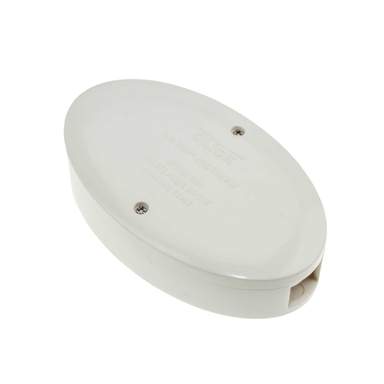
If you are joining inside and in some accessible location (i.e. not buried in a wall, etc) then you have more choices for junction boxes. For example, this will easily deal with 6mm or 10mm T&E cable:
However, if it is going to be hidden then it needs to be a maintenance-free version. Those are typically designed around spring-loaded terminals like the Wagos, along with cable restraint, etc, so they will not loosen due to normal levels of vibration and temperature cycling. But you have to be careful as not all combinations of, for example, Wago boxes and terminals are rated for that, and 6mm is larger than some of the Wago family's max size rating. Also you really need to check the instructions as some specify the box has to have additional cable ties (not supplied!) to hold it shut if it is to meet the MF rating.
 
First thing is you should avoid cutting and joining if at all possible!

If you are joining inside and in some accessible location (i.e. not buried in a wall, etc) then you have more choices for junction boxes. For example, this will easily deal with 6mm or 10mm T&E cable:

However, if it is going to be hidden then it needs to be a maintenance-free version. Those are typically designed around spring-loaded terminals like the Wagos, along with cable restraint, etc, so they will not loosen due to normal levels of vibration and temperature cycling. But you have to be careful as not all combinations of, for example, Wago boxes and terminals are rated for that, and 6mm is larger than some of the Wago family's max size rating. Also you really need to check the instructions as some specify the box has to have additional cable ties (not supplied!) to hold it shut if it is to meet the MF rating.
Thanks for the advice.

Yes I’ll be cutting as a last resort, I should get it fed through eventually.

That junction box looks better than the ones I looked at. Are there any regs specific to these type of junction boxes I need to be aware of? More for my curiosity.
 
Got it fished in the end - I did as suggested and fed another cable through from the outside and taped it to the cable I wanted pulled back through, and with a bit of fairy liquid it came out. It worked without me needing to twist any wires together, I don’t have much wiggle room to remove cable so luckily this worked.

Will give you a laugh though - I got it fished first and gave myself a high-five when I realised I hadn’t re-routed the dam thing! Could have slapped myself…

Great forum this, thanks for all your suggestions.
We've all been there. Fitted quite a few commando plugs without putting the base on before
 
Thanks - I did try that but can give it another shot. If that fails are any of my options worth a shot despite being more work?
Hello Bayzoo. An old galvanised coat hanger, straightened out, should find its way through the wall. Once that's done, tape a short length of singles flexible wire to it and pull it back through the wall. Then join the flexible wire to the cable, cover the joint with pvc tape, and pull the cable in. Good luck. Regards, Colin.
 
We've all been there. Fitted quite a few commando plugs without putting the base on before
Funny you should say that - I need to replace the Euro Schuko plug with a commando plug on my new welder…I don’t want to lose much length on the cable but might have to as the Euro plug isn’t one you can take apart.
 
That junction box looks better than the ones I looked at. Are there any regs specific to these type of junction boxes I need to be aware of? More for my curiosity.
What I like about those is the double-screws for terminating the cable, far less likely to have a poor overheating connections.

In more general terms there are several factors for any cable junction:
  • The current required and size of conductors
  • Support / restraint of the cable against normal movement or vibration
  • Protection against the environment (e.g. water) as well as prevention of contact with the primary insulation or joints
  • If it needs to be maintenance-free as inaccessible
Things like crimps, Wago, terminal blocks (choc blocks), etc are all about the electrical connection and they can vary a lot in suitability (as Lucian pointed out about crimps), but they don't cover the other points.

You must have some sort of overall junction box that provides both cable restraint and to prevent contact with the internals, and there are a lot available, usually for choc blocks or (better) Wago terminals and their equivalents. In most cases they are fine.

However, if a joint will be hidden or outside then you have less choice and they tend to be more specialised (e.g. specific combinations of Wago terminal, box, and lid fastening) and expensive (e.g. resin joints for SWA cable that can be buried, etc).
 
First thing is you should avoid cutting and joining if at all possible!

If you are joining inside and in some accessible location (i.e. not buried in a wall, etc) then you have more choices for junction boxes. For example, this will easily deal with 6mm or 10mm T&E cable:

However, if it is going to be hidden then it needs to be a maintenance-free version. Those are typically designed around spring-loaded terminals like the Wagos, along with cable restraint, etc, so they will not loosen due to normal levels of vibration and temperature cycling. But you have to be careful as not all combinations of, for example, Wago boxes and terminals are rated for that, and 6mm is larger than some of the Wago family's max size rating. Also you really need to check the instructions as some specify the box has to have additional cable ties (not supplied!) to hold it shut if it is to meet the MF rating.
This junction box says it's for a cable size 25 mm2, I'm assuming it would also be suitable for my 6 mm2 T&E or am I wrong?
 
This junction box says it's for a cable size 25 mm2, I'm assuming it would also be suitable for my 6 mm2 T&E or am I wrong?
The is the maximum, usually they go down several sizes and often the data sheet will also give a minimum, though here nothing is stated. In some cases if it feels a bit empty you can strip twice the length and double-back the ends so the screws have more to grip. Quite commonly done with 13A plugs and thin flex.

However, many folks on here have the luxury of bootlace ferrules and matching crimp tool for that sort of thing. While 13A plugs are intended to have fine-stranded flex, most fixed electrical wiring accessories are only intended for solid (single-strand) or 7-strand cable, and a ferrule should be used with any fine-stranded cable like tri-rated, H07RN-F, etc.
 

OFFICIAL SPONSORS

Back
Top

