A

artistwantab

Hey everyone,

So I have a board I am modifying a bit. I thought it would be as simple as removing the normally open tactile and connecting the traces would automatically turn on the device without actually pressing the button.

Nope.

Any ideas on an how I can bypass the button action. I wan't to connect the device using relays and sonoff but I am hung up on the need to have a button pressed.
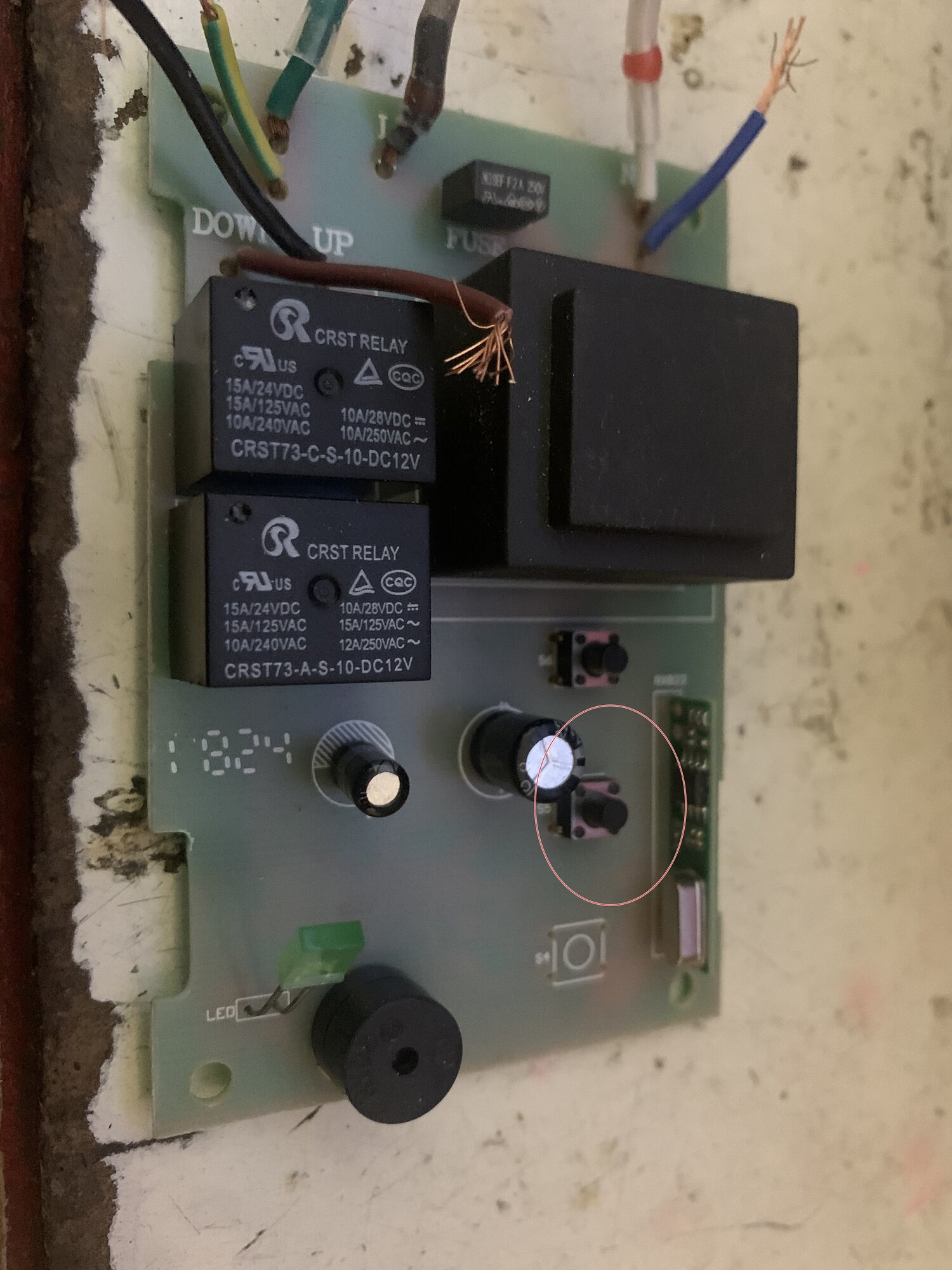
IMG_7091.JPG
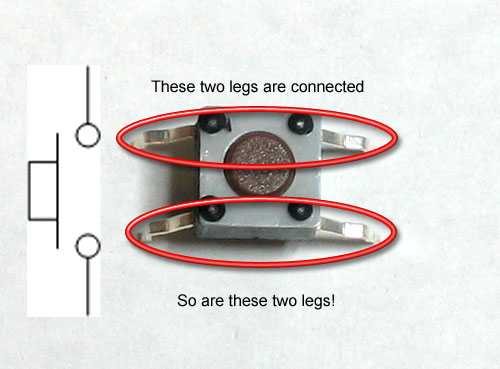
buttonlegsdiag.jpg
 
It's not quite clear what you want to achieve - is it to operate the board (I don't know what it does) remotely e.g. by replacing the button with a relay controlled by something else? If so, there's no trickery, it should work. Have you physically removed the switch (not sure why you need to do that) and if so, does the PCB need a link(s) put across where the two pairs of internally connected pins were? PCB layouts sometimes rely on continuity across the switch to allow tracks to cross. Is your relay working / wired correctly? What is the resistance across its contacts when energised?

OTOH if you want to trigger the button function by permanently shorting it out, that might not work because many circuits are triggered by the transition from open to closed, not by the state of being closed. If the circuit doesn't see the contact close (and maybe open again) it won't respond. In this case you need to create a pulse.

This is something I often had to do when building stand-alone products into systems. One model of RAID drive that I wanted to make self-starting needed about half a second after power-on before it would see a power button press. The neatest solution was actually a little 8-pin microcontroller which I made into a standard 'button-presser' device that could respond to a trigger and press up to four buttons in a programmable sequence. Sometimes you can interface to the button circuit directly with logic signals, but if there is a matrix keyscan or unusual levels, it's easier to interface via an optocoupler, I usually use a FET output type.
 
OTOH if you want to trigger the button function by permanently shorting it out, that might not work because many circuits are triggered by the transition from open to closed, not by the state of being closed. If the circuit doesn't see the contact close (and maybe open again) it won't respond. In this case you need to create a pulse.

This is what I believe the issue is.

So one tactile button causes the motor to rotate in one direction. One causes it to stop and then another rotate in another direction.

I wired it up to work with a momentary switch but It needs to be pressed. If I ignore the switch and simply connect the wires together and power on the device nothing happens. If I keep the wires disconnected and then power on the device then connect the wire the motor starts to rotate.

I am trying to bypass this need for the tactile to be pressed so I can wire this to work with a voice commands
 
Last edited by a moderator:
This is what I believe the issue is.

So one tactile button causes the motor to rotate in one direction. One causes it to stop and then another rotate in another direction.

I wired it up to work with a momentary switch but it need to be pressed. It needs to be pressed. If I ignore the switch and simply connect the wires together and power on the device nothing happens. If I keep the wires disconnected and then power on the device then connect the wire the motor starts to rotate.

I am trying to bypass this need for the tactile to be pressed so I can wire this to work with a voice commands

BTW...I tried to see if I could trigger it via a 5 wire SPDT relay but that didn't trigger it unless I first powered on the board and then a few seconds later power on the relay.
 
Last edited by a moderator:

OFFICIAL SPONSORS

Back
Top