Hi guys, has anyone got any experience of resistances through press fit plumbing fittings?
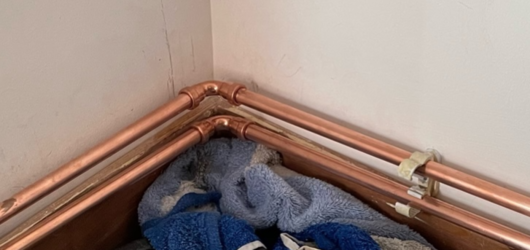
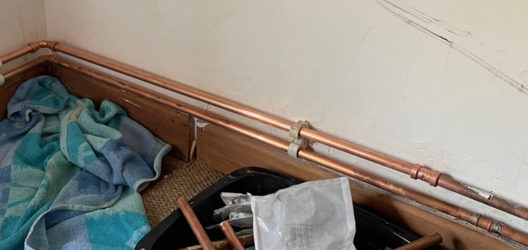
Just been to a job I did last year which was a bathroom, kitchen, new board etc and now noticing 10k values between chrome rail & the flex outlet earth which I don’t recall seeing when I tested it! It is a basement flat and the pipe work is buried but the plumber tells me the pipe is factory sleeved and so shouldn’t have become extraneous on its run. I don’t know about the existing pipe work of course. Main bonds are in place to the gas & water, fully rcd protected.
I’m wondering if the o-rings in the press fit plumbing could be generating the readings….no supplementary bonding in place of course. I know readings through chrome aren’t great either…
Any thoughts appreciated.
 
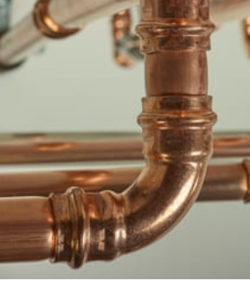
Do you mean the plastic fittings that can also fit copper pipes, or the metal fittings with similar grips?

In the plastic case i would not expect much conductivity but it would depend on how pure (specifically how ionic) the water was. Central heating systems with anti-corrosion stuff might be more conductive than tap water.

For the metal fittings it could be the same, down to a low-ish resistance joint if they have any of the 'one way' spiky gripping washers that can touch both metal parts.

TL;DR could be anything from dead short to 100s of k Ohm!
 
I guess the best way to assay that is to do a test at an individual joint each side, no? My own exeprience with these joints is that there is good metal/copper contact so I would not think they are the cause. Maybe the electric tail rail is not properly earthed?
 
Pressfit type copper should be making a good contact from fitting to pipe as the fitting distorts the copper when compressed.

View attachment 106381

Yep, I think those are the ones. You would expect them to have a reasonable connection. Not a whole lot I can do about it now but it did have me wondering. I’m sure the place was re-piped when the job was done and the main bonds are there so it seemed a little odd. I might need to look into it when I next seen them fitting the stuff and try a test section to see what it shows.
 
I guess the best way to assay that is to do a test at an individual joint each side, no? My own exeprience with these joints is that there is good metal/copper contact so I would not think they are the cause. Maybe the electric tail rail is not properly earthed?
I’m thinking I’ll do some checking to see what values the joints throw up. The rail is a dual fuel but there is no issue with the cpc or values at the flex outlet.
 
Doh, I forgot those are the crimped ones!

I was thinking of this type:
Going off topic, but funny you should mention those. I used those at a friends house last week to re-route some heating pipes - they had gone around a chimney breast but the chimney was removed.

1677415045303.png
Irritatingly when the system was re-filled the bottom one leaked. No idea why, maybe I missed a burr on the pipe. And I couldn't find the removal tool!

So I ended up cutting the bottom pipe out again and putting a new section in with yorkshire solder fittings and slip-couplers.
The funny thing is that the result is the top pipe looks very DIY and bottom pipe looks more like a plumber did it.

1677415130342.png

It would have been quicker to do both pipes properly in the first place but I only play with plumbing about once a year and thought the push fit would be easier. Lesson learned!
Are the crimped fittings any good? Never tried them.
 
Are the crimped fittings any good? Never tried them.
No idea as I can't justify the cost of the crimping tool.

When I put my wet pants on it is usually the brass compression fitting I use as they can be done without special tools (beyond pipe cutter for neatness, slip-pliers to grip bodies, and decent adjustable spanners as no two brands seem to have the same A/F size) and without the risk of setting the place on fire.
 
That setup is actually a big part of the problem.

A washing machine doesn’t drain like a sink — it pumps water out very fast in short bursts. So even if your sink and dishwasher are fine, they’re not pushing nearly the same volume at once.

If your washer is sending water 6–7 feet up and then into a shared kitchen line, any slight restriction in that pipe (grease, soap buildup, lint) will cause it to back up when the washer drains.

That’s why it only overflows during the drain cycle and not with normal sink use.

I’d check a few things:
  • partial clog in the line (very common in kitchen drains)
  • buildup from detergent or grease
  • pipe capacity vs washer discharge rate

Running a proper drain snake can help, but in a lot of cases the line needs a deeper clean because the blockage isn’t always fully solid — it’s often buildup along the pipe walls.
I came across a good breakdown of what causes these types of overflows and how to properly clear them here:
Your setup should work, but only if that line is completely clear and able to handle the washer’s output 👍
 

OFFICIAL SPONSORS

Back
Top