1567168557052.png

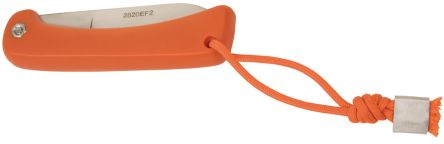
I use this one from Bahco (but I hardly ever go anywhere T+E).
 
leaves it dog rough. best way is with an electrician's knife or these:

View attachment 51768View attachment 51767only problem with these is if boxes/enclosures already fitted, can't get close enough to the entry point.

disclaimer.... pic shows cheap set. mine are Klein, but the pic is copyright so can't paste. :p:p:p.

How do you this thing inside a back box?
Nothing wrong with using the earth wire to strip the sheathing. A knife will be worse as you won't be able too see if you have caused any damage to the insulation of live conductors.
 
How do you this thing inside a back box?
Nothing wrong with using the earth wire to strip the sheathing. A knife will be worse as you won't be able too see if you have caused any damage to the insulation of live conductors.
Cid without being rude. I totally disagree with the Statement "you wont be able to see "1f the live conductors have been damaged if you use a knife", using the cpc to strip the cable bad practice in my book and many others I would imagine. Can't have any pride in your workmanship if you leave the ends like the example shown in the OP
 
Last edited:
Also notice the neutrals of the RFC in separate terminals, no blue sleeving to the grey conductor used as a neutral or brown sleeving to the black but most worrying is the 3 32A CBs feeding 2.5mm cables
 
It’s booked in for remedial works on Wednesday. Not sure whether to bother trying to get a gland on incoming swa
 
Cid without being rude. I totally disagree with the Statement "you wont be able to see "1f the live conductors have been damaged if you use a knife", using the cpc to strip the cable bad practice in my book and many others I would imagine. Can't have any pride in your workmanship if you leave the ends like the example shown in the OP

It's not been done properly in the OP
Cid without being rude. I totally disagree with the Statement "you wont be able to see "1f the live conductors have been damaged if you use a knife", using the cpc to strip the cable bad practice in my book and many others I would imagine. Can't have any pride in your workmanship if you leave the ends like the example shown in the OP

It's not been done properly in that picture. When done properly it is inconspicuous and out of the way. There's no rational explanation why this is bad practice.
 
Whenever possible, I strip the sheath before securing the back boxes. when I do use the cpc tug and snap method, I trim the sheath off square with these:
1567195164056.png
 
I don’t think there’s a “right or wrong way” to strip the t&e back, whether you use the cpc, Line & neutral conductors (as shown in the GSH college videos) or an electricians knife, it’s whatever way you prefer to do and if it works for you, then all’s good with the world.

I personally can’t use the L & N to peel the outer sheath back as I don’t have 100% strength in my hands anymore, so I use the cpc with my pliers to strip it back (as taught), plus I’m too heavy handed to use my electricians knive and always cut through the l & n pvc exposing the copper.
 
I have seen guys using a sharp Stanley knife to strip the sheath off t@e and if you check the cut I will guarantee 9 times out of 10 they have sliced right into the conductor insulation.
Auto strippers are great but you really struggle to get them inside the sunken in back boxes.

I have seen strippers with a t&e shaped stripping hole but again you can’t get them inside the box. You need to strip Before putting into the box.
 
I tend to strip t&e using the CPC. I pull the CPC back gently and always trim the outer sheath away neatly afterwards. I have tried a sparks knife but never managed to get used to it. Apart from it possibly looking cack as per the photo above, I don't see an issue with it electrically.
 

OFFICIAL SPONSORS

Back
Top