L
loz2754
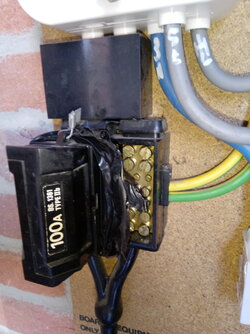
What I'm seeing is a purposely designed knockout to enable connection of the earthing conductor.
Unfortunately the 2391 coupled with the 2382 is sold as the magic ticket to doing EICR's add in a copy of codebreakers and your good to go without having any core electrical knowledge or qualification and the experience to back it upThis is seen at a vast majority of cutouts and is normal practice. And TBH it does make me worry that some people that are carrying out EICRs don't have the understanding of what is required and how to code the so called issues
If I'm being completely honest it's a C code at best BUT if I deemed it to be a potential danger to the client (read: kids) then I'd like out my arse to get the DNO there to make them sort out. Sure it's only a bung and likelihood of any poking anything in there when a fault condition exists is extremely low but my integrity is worth more to me than a miffed off DNO agent, I'd rather waste Thier time and get it sorted than do nothing and something bad happen@Lister1987 have a look at the picture and find the exposed live part.
I totally agree if there is an issue with the incoming then we do code it or report it or both.
if it’s an immediately dangerous situation I would not leave site until the issue was resolved or I had handed it over to the DNO.
In this instance with this incoming supply what do you see and how would you code it?

You don't know unless you ask the DNO the question you have come on here with a concern about the service head yet you won't contact the DNO or their adviceI'm totally aware that this is DNO related issue but based on my experience with them I know they won't come for this one.
I would be requesting they came out to repair the TNS earth, the last time I had a major problem with a TNS connection it was found that half the street had no earthVery recently doing another EICR I had high Ze reading on TNSsupply. DNO said they will confirm if TNCS is available and once it is they were happy for me to connect earth conductor to fusehead neutral connection point so they don't need to come over.
You say that but they do have an affect on how the inspector would perceive risk, it's why we have an external influence code for persons; from children up to skilled person.No Code and Regulations do not make allowances for children/kids.
You right I don't know the answer if I don't contact DNO.You don't know unless you ask the DNO the question you have come on here with a concern about the service head yet you won't contact the DNO or their advice
I would be requesting they came out to repair the TNS earth, the last time I had a major problem with a TNS connection it was found that half the street had no earth
Did you get the authorisation in writing before you created the TNCS connection, I would be very cautious if it was a verbal authorisation and you did not get the name and job title of the person authorising it
In a house full of bonded metalwork and earthed appliances, it's hard to see how covering up that small piece of exposed metal will be of benefit should the DNO's neutral go OC.You say that but they do have an affect on how the inspector would perceive risk, it's why we have an external influence code for persons; from children up to skilled person.
Does it make me a bad engineer for going outside of the guides and documents we're told to work to, or does it make me a more con-che-n-tious (can't spell the word) engineer for looking at the bigger picture and wanting to have a better understanding as to why things are the way they are, why we have cutouts like these and why a missing cover is acceptable on 1 area but not another; I'm thinking diverted neutral currents going into the property and that section that is accessible becoming live, sure it's s million to one chance but so long as I can say I've done what I can to sort it, then I sleep better, if the DNO want to shrug and walk away, that's on them.
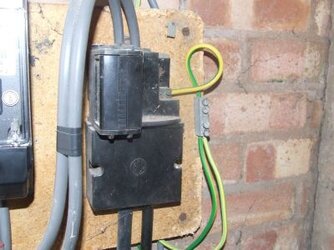
Indeed. Like in this photo:This is seen at a vast majority of cutouts and is normal practice. And TBH it does make me worry that some people that are carrying out EICRs don't have the understanding of what is required and how to code the so called issues

You say that but they do have an affect on how the inspector would perceive risk, it's why we have an external influence code for persons; from children up to skilled person.
Does it make me a bad engineer for going outside of the guides and documents we're told to work to, or does it make me a more con-che-n-tious (can't spell the word) engineer for looking at the bigger picture and wanting to have a better understanding as to why things are the way they are, why we have cutouts like these and why a missing cover is acceptable on 1 area but not another; I'm thinking diverted neutral currents going into the property and that section that is accessible becoming live, sure it's s million to one chance but so long as I can say I've done what I can to sort it, then I sleep better, if the DNO want to shrug and walk away, that's on them.
I know it's true that not any one of us sparkies knows everything and has come across every type of installation practice, but this reinforces a comment I, and others, have made in several different threads on the subject of EICRs and who should be doing them.It is a no code. Not even an observation. Not an issue. No potential dangerous Situation. No need to contact DNO.
The point I was trying to make earlier was that I am concerned, but not about the cutout,
I am concerned and gobsmacked that anyone carrying out EICRs would not know this Was normal for a cutout. There is absolutely nothing wrong with it.