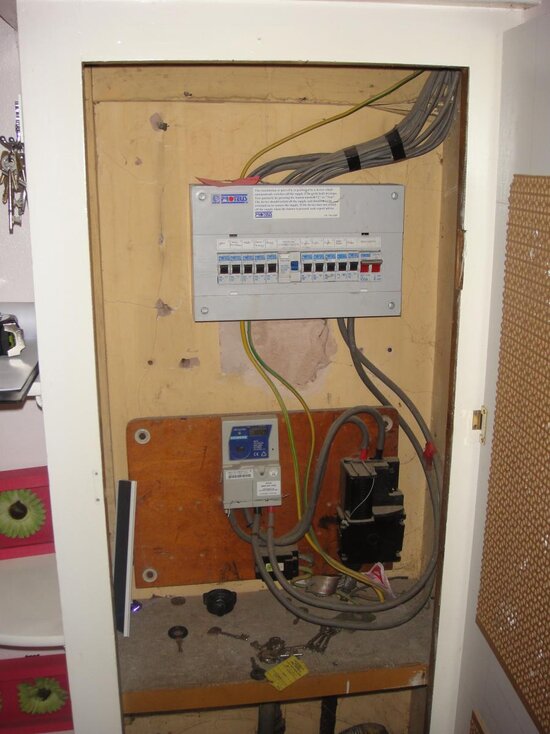
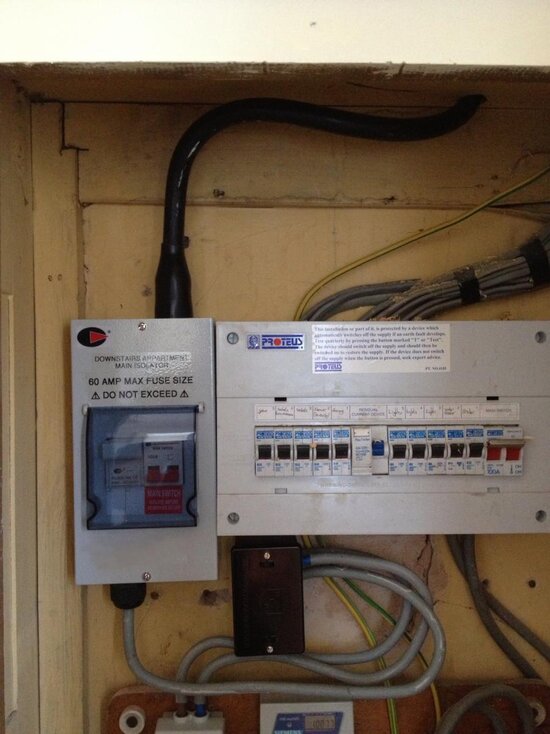
here you go, not the neatest job, but was quite pleased with the result.

View attachment 21090View attachment 21091View attachment 21092View attachment 21093

uksparks...credit where credit is due, and to be fair that's a decent effort.

Looks simple too someone who isn't familar with SWA but getting them into plastic enclosures is a complete pain in the arse - bend all over the place. I always cringe when the client requests one - "please sir, anything but plastic" is my cry.

Bravo, sir.
 
I have to say it was a pig as that's 16mm 3 core which as you know is not the most friendly stuff to work with. It was one of those jobs that I thought, mmm not sure about this but when complete I was rather happy with it. Thanks for the kind comments.
 
16mm 3 core not too bad if you're doing a joint underground i.e. working on top of it.

Can't imagine that to have been much fun especially in the location it is. As i said, nice work :)
 
Piranha nut = Good, plus if you can arrange for the singles to lead out of the same end, you can make a neat loop in the box with the joints staggered one each side.
<rant>
I am extremely bored with finding banjos clamped between the gland and the plastic box, and then usually they've run the bolt through the plastic too and put the crimp ring on the inside. Continuity of sorts but not for long. I used to get excited and demonstrate to myself how easy it was for the clamping force to slacken as the plastic compresses, but now I just turn the circuit off and put an X in the box, shaking my head sadly.
</rant>
 
The other end was equally as much of pig, but it all connected up ok, that went into a metal switched fuse so was a bit easier.
 
Banjos have there place and usually sty in the packet they came from, but sometimes I use them when I have to.
 
I use both, quite like the piranha nuts.
If I'm using banjos with plastic boxes, I put the banjo on the inside of the box then crimp onto the earth fly lead and nut and bolt through the banjo tail hole (have used ny-lok type nuts once or twice, which aren't coming apart anytime soon (continuity wasn't affected) ) then bend the banjo tail carefully (so as not to break the box) so the lid will shut. works alright and if someone opens the box, first thing they encounter will be the earthed banjo tail. Also retains the IP rating of the box and saves faffing around with sealing compounds / rubber washers etc....
 
Hi, can anyone recommend the best way of terminating an swa into an insulated enclosure. I wanted to use metal clad but the client would prefer to use insulated to get a better lifespan out of it.

Cheers
D


Terminate gland into a metal coupling and clamp the banjo berween them.
Then bush the coupling to the plastic box, underneath if external.
Take earth off the banjo and use a stuffer if earth is to go into the box.

Boydy
 
outside into an ip rated box, preferably metal one. wiska box does the job well.
inside into a metal consumer unit/isolator
 
Banjos have there place and usually sty in the packet they came from, but sometimes I use them when I have to.
you were asked earlier in this thread why the sub meter....
and i have noticed you have ducked the question...as you have made no attempt to answer..
so I will ask why the sub meter....

and whats the distance from the cutout...as you may need to fit a KMF....
 
Jesus, 25 posts on how to fit a SWA cable to a plastic enclosure!! Things must be getting really Bad in the UK these days!! ...lol!!
 
Jesus, 25 posts on how to fit a SWA cable to a plastic enclosure!! Things must be getting really Bad in the UK these days!! ...lol!!
well...its either this or the RCD threads...

but i guess:

stock-photo-pair-of-scales-is-made-of-stones-on-the-cliff-41640082.jpg
 
you were asked earlier in this thread why the sub meter....
and i have noticed you have ducked the question...as you have made no attempt to answer..
so I will ask why the sub meter....

and whats the distance from the cutout...as you may need to fit a KMF....

Take a look at post 12 where I did answer your question... "The sub meter, it's in an annex, he wanted a sub meter to make it easier splitting the bill." Basically hes got a large ish house and to save messing around guessing I said why not just stick a sub meter in then you know how much you use and knock it off the bill, how he works it out I don't know, but surely it will help somewhere along the line, for the sake of £30 it was a good idea.

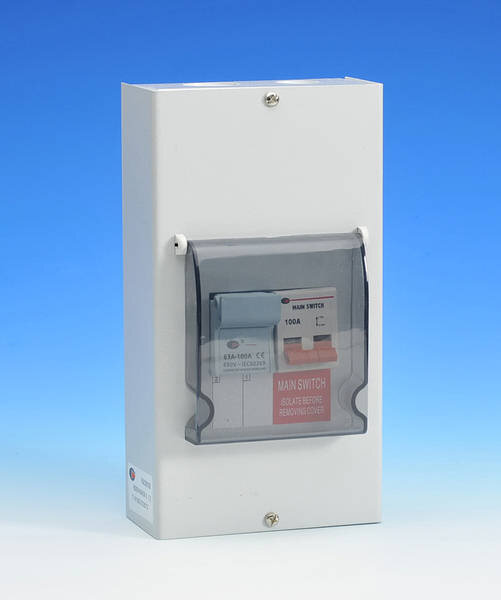
KMF? Sorry not sure what you mean? Do you mean a switched fuse? If so I did mention this in post 21, see photo attached of what I connected it into. I put a 63A fuse in it, its 11 meters from where it the switched fuse is to the new board.

I cannot actually find a photo of the finished job, but see the photo i took, i put it to the left of the board here and split the tails in a henley block etc, also had the main service head upgraded to a new plastic one and 100A fuse fitted.

DSC04152.jpg CGFS100.jpg
 
Just found this one, I cant seem to find the photo of it all finished, but this is part way through, ill keep looking for the other photo, you may ask why put a REC2 in when the meter has an isolator, well, the customer wanted a big red on off switch in case of emergency, so I put one in and said switch that, it will kill the lot.

After this photo, earth was connected etc and more tails and old tails from old board cut and put into block etc, ill try and dig the photo out.

pic.jpg
 

OFFICIAL SPONSORS

Back
Top