
Me either, but i was just pointing out the tool.Looking at the address and the feedback of that seller, I would definitely not be buying from them!

Me either, but i was just pointing out the tool.Looking at the address and the feedback of that seller, I would definitely not be buying from them!

Me either, but i was just pointing out the tool.
Unbranded product.
"Safety level: CE CAT.II 1000V"
"Security level: CE CAT.II 1000V"
"Height <2000m"
Not sure I'd even point it out to anyone on a public forum. Who knows what standard it is manufactured to as there's no indication from the description or images. Perhaps they're great or perhaps quality varies wildly from one to the next
Pretty Mouth said:
I have a UNI-T UT13A, which has a wheel to adjust the sensitivity, and will detect down to 24v supposedly. I can't say if it's any better or worse than others on the market, as it's the only one I have ever owned (5 years).
I wouldn't be without it though, one of the most useful tools I own. Great for identifying cables.
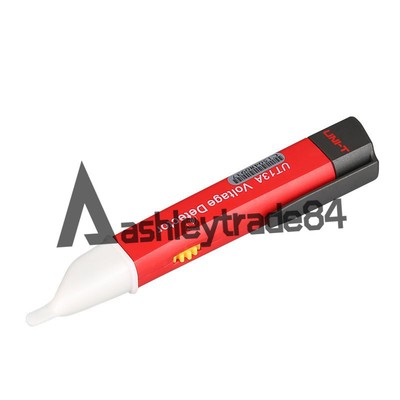
UNI-T UT13A Adjustable Sensitivity Voltage Detector Pen AC 24-600V Non-Contact | eBay
Find many great new & used options and get the best deals for UNI-T UT13A Adjustable Sensitivity Voltage Detector Pen AC 24-600V Non-Contact at the best online prices at eBay! Free delivery for many products!www.ebay.co.uk
Obviously, you ensured the one you have promoted complies.
I didn't edit the post as such, but you debunk one but not anotherIs there a reason why you've edited another member's post to make it appear as though it was mine?
I didn't edit the post as such, but you debunk one but not another
I haven't 'debunked' any product, but simply highlighted issues that may arise when personally importing goods of unknown quality, which are poorly advertised.
The other indicator is from UNI-T and, while I can't comment on it's reliability, I see no reason to question a product which is manufactured to known standards, by an established company and sold through a distribution network that bears a measure of responsibility to ensure it is fit for purpose.
Is there anything else I can help to clarify?
Interesting. According to UNI-T, the product is discontinued, but as you have discovered, is available on ebay from chinese vendors. Looks identical to the one I have.UNI-T UT13A Adjustable Sensitivity Voltage Detector Pen AC 24-600V Non-Contact | eBay
Find many great new & used options and get the best deals for UNI-T UT13A Adjustable Sensitivity Voltage Detector Pen AC 24-600V Non-Contact at the best online prices at eBay! Free delivery for many products!www.ebay.co.uk
Obviously, you ensured the one you have promoted complies.
 meters.uni-trend.com
Interesting. According to UNI-T, the product is discontinued, but as you have discovered, is available on ebay from chinese vendors. Looks identical to the one I have.
UT13A/UT13B AC Voltage Detectors-Adjustable Sensitivity (220V/110V) (Discontinued) - UNI-T Meters | Test & Measurement Tools and Solutions
UT13A/B are non-contact AC voltage detector. They are lightweight and convenient to carry due to its pocket size. The voltage detectors can be used in residential, commercial, and industrial settings. The devices can detect electricity when they are close in range of live adapters, connection...
Perhaps you can tell us all about what standards non contact voltage indicators should comply with, how to ensure that a product does comply with said standards, and what dangers physical or legal could result from using a non compliant product.. Because I haven't a clue, and I couldn't give a monkey's.
If that's what I'd meant, I'd have posted as much.After you looked them up, you mean
Perhaps you can tell us all about what standards non contact voltage indicators should comply with, how to ensure that a product does comply with said standards, and what dangers physical or legal could result from using a non compliant product.. Because I haven't a clue, and I couldn't give a monkey's.

I've no idea what standard non-contact voltage testers should meet, which is why I haven't suggested any.
What I did refer to was 'manufacturing standards', meaning quality control. I even made an effort at clarifying this with the comment "Perhaps they're great or perhaps quality varies wildly from one to the next".





