sometimes will work, sometimes won't. sometimes OK for a while but lamp life is short. better to fit GU10 LEDs, then there's no argument when they fail.
 
i had a set of under cabinet led lights on standard transformer , and hours after fitting the customer said , they nearly burned the house down :S , said he got another spark in that night to fix them and he said the required to be on led transformer only
 
sounds about right. fit the correct driver as specified by the lamp suppliers.
 
so take them back if they said they'd work on a transformer. never believe a supplier. all they know is profit margins.
 
I have recently looked into this as a customer has lots of MR16 downlights he wants switching to led from halogen. My research suggested that led drivers were best fitted as 12v transformers are hit or miss when running led lamps.

Get on to the manufacturer if you feel you have been misled by their instructions.
 
I believe that the old wire wound transformers are OK to use with LED lamps. I converted a few shop 12V 4 X 50W fittings for a shopkeeper friend over here a while back, and all seems fine to date!! Unless i, or should i say the shopkeeper has been lucky... lol!! I wouldn't try that with halogen electronic type transformers though, they tend to need a minimum wattage that exceeds the much lower LED wattage to work....
 
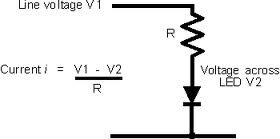
Ok lot of posts on this...12v transformers provide a variable current to 12v halogen lighting.....led drivers provided a set constant forward current to led lighting. now if you use a electronic or wire wound transformer, the leds will run to the max current limit, and usually burn out. By using a constant current driver we can limit this to the leds by usually using a 180ohm resister in each led fitting we can keep the current constant to the drivers limit. And the current will be constant to each led fitting....now voltage has no relevance here at all as long as it is above 1.2v per led or 12v above the light fittings multiply led arrangement ...so its output could be 50v and all would work fine
 
So we need to understand leds and the forward bias
led1.jpg

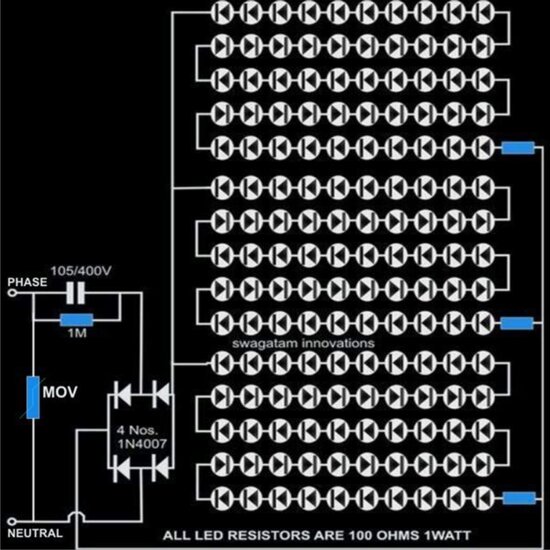
and then we need to see the commercial side of led fittings

led2.jpg
 
Ok lot of posts on this...12v transformers provide a variable current to 12v halogen lighting.....led drivers provided a set constant forward current to led lighting. now if you use a electronic or wire wound transformer, the leds will run to the max current limit, and usually burn out. By using a constant current driver we can limit this to the leds by usually using a 180ohm resister in each led fitting we can keep the current constant to the drivers limit. And the current will be constant to each led fitting....now voltage has no relevance here at all as long as it is above 1.2v per led or 12v above the light fittings multiply led arrangement ...so its output could be 50v and all would work fine

The shopkeeper must be lucky then, it's been almost a year now since i converted his shop fittings and he's only had to replace (or should i say i had to replace) 2 or 3 lamps so far. These fittings are on from 8am to 9.30pm 7 days a week.


I can see you're point though in the forward bias/constant current. How reliable are these LED drivers as a matter of interest, i've been getting some mixed reviews on them to date??
 
To be honest E54...some are not, as with the old electronic line systems, most manufactures make them on the limit especially in the what is supplied by China in uk ...the transformers are supplied in kits of say 3 x 50 watts with a 150watt rated transformer...right on the limit....you should always allow a least 25% or more greater wattage for heat dissapation and cool running....some led lighting especially Philips have internal bias which will run on old transformers which are really good units
 
To be honest E54...some are not, as with the old electronic line systems, most manufactures make them on the limit especially in the what is supplied by China in uk ...the transformers are supplied in kits of say 3 x 50 watts with a 150watt rated transformer...right on the limit....you should always allow a least 25% or more greater wattage for heat dissapation and cool running....some led lighting especially Philips have internal bias which will run on old transformers which are really good units

I know the sets you're talking about, normally found in the sheds and the like. lol!! Probably most of the world's supply of LED lamps are now manufactured in China and some other Asian countries, Philips and other big names included...

Not that it should make any difference, but the lamps in these old 4 lamp recessed fittings are AR111 11 Watts.

We will be having several hundreds of LED driver controlled 12 volt lamps on this project many of those will also be AR111 between 9 and 15W. So what's the SP on equivalent mains voltage lamps, i take it these will also include internal components... What's the better choice in your opinion (and anybody elses opinion) as to be honest i haven't had much to do with LED lamp fittings to date. I really do need to find the time to do a bit of research and talk to some local manufacturers while i'm at it... lol!!
 
Last edited by a moderator:

OFFICIAL SPONSORS

Back
Top