L

longshanks

Just thinking of getting into PAT testing and was wondering if anybody has or can give me advice on what are Class 1, 2 & 3 items? I know what it says in the book but was just interested in what the appliances are, for example what class is a:

Kettle
PC
Monitor
Lamp
Fridge
AC adapter
Extension lead
etc, etc

Maybe a stupid question but somebody has to ask :)

Tony
 
Hi Tony,
The question your asking is all to do with the construction class of equipment.

A "competent" PAT tester should be able to answer that question simply. I'd highly recommend going on a training course, or watching a PAT Training DVD before carrying out any PAT Testing.

You might also find our Electrical glossary useful.

Hope this helps.... ;)
 
Just thinking of getting into PAT testing and was wondering if anybody has or can give me advice on what are Class 1, 2 & 3 items? I know what it says in the book but was just interested in what the appliances are, for example what class is a:

Kettle
PC
Monitor
Lamp
Fridge
AC adapter
Extension lead
etc, etc

Maybe a stupid question but somebody has to ask :)

Tony

Grab a copy of the IEE code of practice for the in-service inspection and testing of electrical equipment, you'll need it anyway if you go the C&G 2377 route.
 
all the answers are in the book all the items you have listed apart from the ac adaptor I would say are class 1. Classs 1 items are items with have a earth connection in the plug. Your ac adaptor would be class 2
 
The point is you need to look at the markings on the appliances, the flex used, and inside the plug to determine what class an appliance is. It is not a simple as 'it's an extension lead, therefore it is class 1' etc. I have come across a few instances of a two-core extension lead powering a desk complete with computers, monitors, printers etc. I think they liked the orange colour of the cable!
 
Slighty off topic but wondered if anyone on the forum has actually based a business around just doing in-serivce inspections??

I'm thinking of getting a tester just so I can add this as an additional service but even then looking at the figures its going to take a while to even pay the equipment off before I start making any money out of it
 
Thanks for these answers guys, i guess i was lloking for somebody to give me an extensive list as to what all appliances are classed as. Must be the lazyness in me.

Thanks

Tony
 
The point is you need to look at the markings on the appliances, the flex used, and inside the plug to determine what class an appliance is. It is not a simple as 'it's an extension lead, therefore it is class 1' etc. I have come across a few instances of a two-core extension lead powering a desk complete with computers, monitors, printers etc. I think they liked the orange colour of the cable!


If you came across that would you fail the extension cable?
 
If you came across that would you fail the extension cable?
That depends on the integrity of the condition of the cable. The cable could pass as a class II extension lead, but its application is totally wrong. When I have come across these I have either removed the plug or disconnected the extension lead and removed it from the office. Moving customers property like this is actually overstepping the mark, but it was the surest way I knew to cover myself. If they subsequently chose to reinstate the extension lead then that is their lookout. To be clear, in all cases I made it apparent to both the user and the responsible person how very dangerous the situation was and they have been in agreement with my actions. I also explained the situation in my written report that accompanied the schedule of results. Hopefully they listened, understood and have made alternative arrangements. But the extension lead can only be failed if there is something wrong with the condition of it, not the application.
 
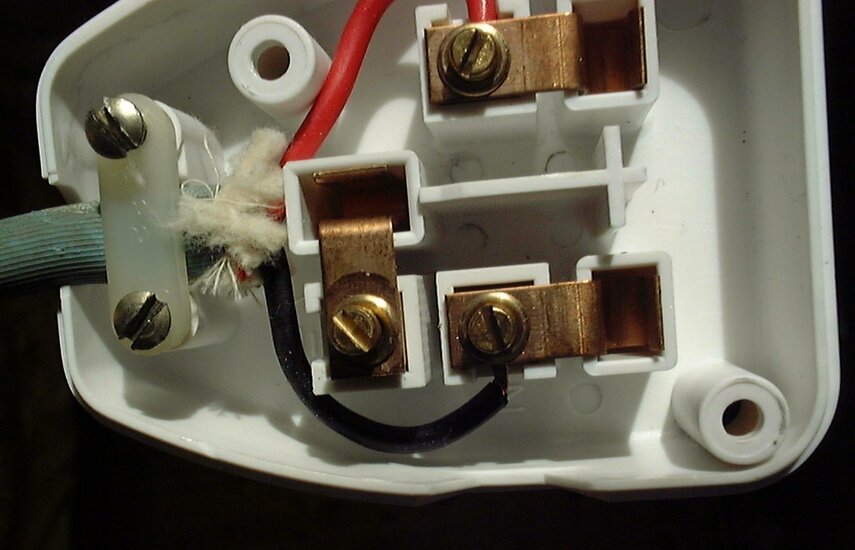
Completely agree with actions regarding ringers comments above. Good example of this occurance I came across (see below).

DSCF0095.JPG

Hey, at least they got L & N the right way round !!

However, it can never be said there's such a thing as a Class II extension lead !! You can come across a cable with only two conductors but it can't be regarded as an extension lead. To call it and treat it as such only invites the possibility of it being shifted (by some bright spark), to be moved elsewhere with tragic consequences if used to power Class I equipment which subsequently developes a fault condtion.

Bottom line --- never leave room for risk. Murphys Law applies in all cases.
 
Last edited by a moderator:
YES! very dangerous.
a 'normal person' could use the lead to power equipment requiring an earth which it doesn't have!
 

OFFICIAL SPONSORS

Back
Top