This is probably worth doing just so it is there and a point for access/test. There is nothing in the regs saying bond cables have to be continuous, but it is shown in the GN8 book I think. Obviously there is a valid point that any joints need to be sound and ideally meaintance free but a properly implemented crimp (or solder) joint satisfies that aspect.I'm thinking of quoting to :
1 - Install a MET (removing the crimp that was objected to).
Definitely needed. While it might be getting TN values due to service pips just now, that could disappear if some plumber or utility replaces metal pipe with plastic pipe or push-fit joints.2 - add a 2nd rod which should bring down Ze to under the scams 200 ohm number. It will also mean there is a functional set of earth connections that are accessible
Both make sense.3 - sort out all the damaged accessories, change the bathoom light, and maybe consolidate everything in one DB if customer agrees to extra cost
4 - run a new 4mm radial sockets circuit to the dining room, so in future this can be extended to rewire the kitchen.
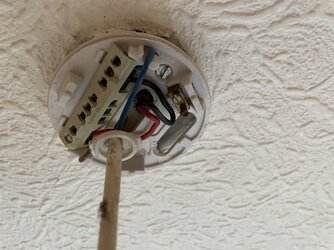
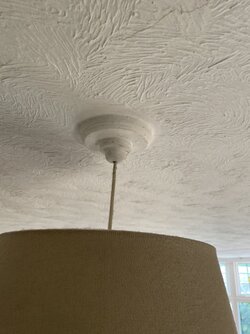
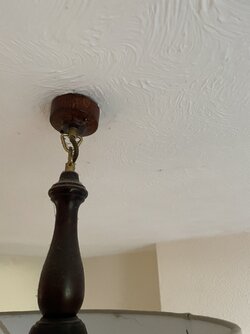
Not so sure about that. The BGP#4 is really talking about pre-1966 cable work that never had a CPC, not new systems that are faulty in terms of open CPC.5 - remove the single class 1 light fitting (even though it's earthed) and just quote BPG 4 and say while the lighting circuit should be earthed it's rcd protected and all fittings are plastic, so it's only a C3 according to BPG4. Maybe also offer a 'quinetics' lighting rewire.
Could you take a CPC from another circuit to that segment of the lights?
Do you know if they are all open (i.e. some monkey just did not believe in CPCs for lights) or are they linked but one connection point back to the supply is missing?