Hi,

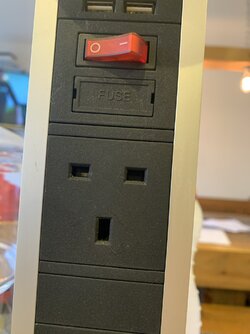
I've gone in to a job as a 2nd opinion on a EICR done by a previous contractor. One of the issues was a C2 for an upside shower switch. It's a neon switch so although its not fitted right it's still obvious when it's on or off.

I've got same issue on with an upside down socket outlet.

Any advice?
 
Is there a particular reason they are mounted that way.
 
Socket... pass no obvious reason, the shower switch looks like it was fitted like that as it suited the length of the cables to reach the Neon side of load (load is too short to reach other side if switch if that makes sence)
 
What regulation is being broken by not having the orientation the same as normal?

Most socket outlets for example aren't marked top/bottom, nor is it in the instructions, it's merely convention that dictates earth to the top. In reality if the outlet is close to a worktop or something, it makes more sense to be "upside down" as then the flex isn't bent sharply - especially with moulded plugs and their long strain relief.

If it doesn't break a regulation it shouldn't be a C2!

The switch may have a top/bottom - so in theory it isn't fitted in accordance with the manufacturer's instructions, but that's all, certainly not a c2 for me. (The only orientation that's mandatory is the fireman's switch I think)
 
mounted upside down wouldcomply with the current industry standard of "up for on".
 
If it has on and off marked on the front, you could argue that the text is illegible
 
In other countries is it common to have up as on, not down as we do. Also with two-way lights it depends on the other switch!

Personally I would not accept that for work done for me because it is a stupid thing to do here, but I can't really argue it is unsafe.
 
If there's no air vents on or in the accessories and no manufacturers indication then I wouldn't see any reason they couldn't be mounted in various orientations as long as the users/owners are happy. If it's a room thermostat with air vents it could affect it's operation and accuracy. I guess same with circuit breakers that are vented top and bottom, mounting them sideways could affect the tripping curve slightly due to less air flow through them...in theory at least.
 

OFFICIAL SPONSORS

Back
Top