SocketSpacers

Small Comp' Advertiser
Supporter
Hi all,

I run a small UK business making custom spacer plates for plug sockets, light switches and other faceplates. They’re mainly for jobs where the socket/switch has ended up recessed after tiling, plastering, panelling, etc. or where there isn’t quite enough room behind the faceplate for the wiring.

I've now moved them onto a dedicated site:

logobanner.png

There’s a simple “Build My Spacer” tool where you can choose:
  • single or double gang, or larger gang sizes​
  • width and height​
  • depth​
  • colour​
  • corner radius​
  • fixing lugs or no lugs​
  • quantity, with multi-buy discounts​
They’re intended as a neat way to bring the faceplate forward and get a better fit than packing pieces or standard off-the-shelf spacers.

As a small thank you to the forum, code FORUM-LOVE gives free UK delivery at checkout.
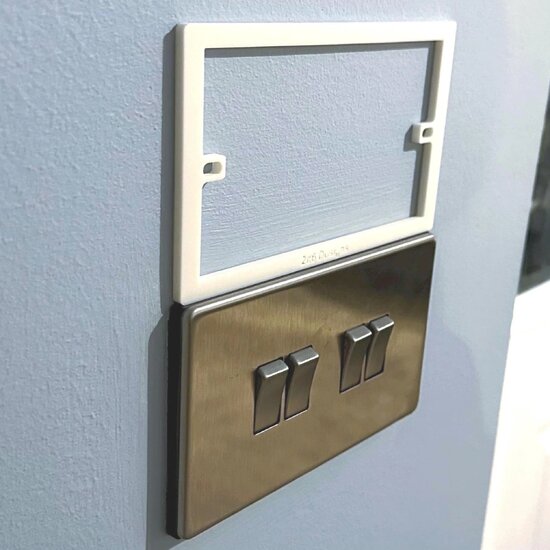
44fc2a8e-il_fullxfull.6696576107_8uvg.jpg cf5a89af-il_fullxfull.6623391746_qm36.jpg 95396650-il_fullxfull.6623391260_buqh.jpg

I’m still improving the site and product range, so I’d genuinely welcome feedback from electricians on what would make them more useful on real jobs - common dimensions, colours, fixing options, awkward faceplates, brand-specific details, etc.

If anyone wants a look, the site is:

https://socketspacers.com

Cheers,
Luke
 
Last edited by a moderator:
Hi all,

I run a small UK business making custom spacer plates for plug sockets, light switches and other faceplates. They’re mainly for jobs where the socket/switch has ended up recessed after tiling, plastering, panelling, etc. or where there isn’t quite enough room behind the faceplate for the wiring.

I've now moved them onto a dedicated site:

View attachment 125019

There’s a simple “Build My Spacer” tool where you can choose:
  • single or double gang, or larger gang sizes​
  • width and height​
  • depth​
  • colour​
  • corner radius​
  • fixing lugs or no lugs​
  • quantity, with multi-buy discounts​
They’re intended as a neat way to bring the faceplate forward and get a better fit than packing pieces or standard off-the-shelf spacers.

As a small thank you to the forum, code FORUM-LOVE gives free UK delivery at checkout.

View attachment 125020 View attachment 125021 View attachment 125022

I’m still improving the site and product range, so I’d genuinely welcome feedback from electricians on what would make them more useful on real jobs - common dimensions, colours, fixing options, awkward faceplates, brand-specific details, etc.

If anyone wants a look, the site is:

https://socketspacers.com

Cheers,
Luke
Thanks for supporting the forum Luke.

😁🫡
 
As mentioned I'd really appreciate any insights you have on what could improve the
Hi all,

I run a small UK business making custom spacer plates for plug sockets, light switches and other faceplates. They’re mainly for jobs where the socket/switch has ended up recessed after tiling, plastering, panelling, etc. or where there isn’t quite enough room behind the faceplate for the wiring.

I've now moved them onto a dedicated site:

View attachment 125019

There’s a simple “Build My Spacer” tool where you can choose:
  • single or double gang, or larger gang sizes​
  • width and height​
  • depth​
  • colour​
  • corner radius​
  • fixing lugs or no lugs​
  • quantity, with multi-buy discounts​
They’re intended as a neat way to bring the faceplate forward and get a better fit than packing pieces or standard off-the-shelf spacers.

As a small thank you to the forum, code FORUM-LOVE gives free UK delivery at checkout.
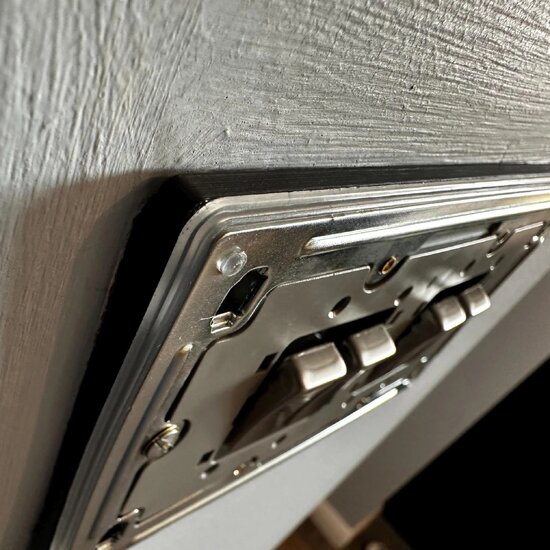
View attachment 125020 View attachment 125021 View attachment 125022

I’m still improving the site and product range, so I’d genuinely welcome feedback from electricians on what would make them more useful on real jobs - common dimensions, colours, fixing options, awkward faceplates, brand-specific details, etc.

If anyone wants a look, the site is:

https://socketspacers.com

Cheers,
Luke

Thanks for supporting the forum Luke.

😁🫡
My pleasure, thanks for having me!

And if anyone has requests for more spacer options etc. then please let me know! :smiley:
 
Nice idea, are they any of the following?

Low smoke and fume
Self extinguishing
Fire retardant
 
I presume that these are 3d printed? What filament do you use?
 
I think what is being suggested is that these may not be of a suitable material to be used as an electrical accessory.

As you may know, there are products like this already on the market, but they only come in white, made from the same material as the accessory and the shape generally matches the same manufacturers profiles.

Having variable depths, different colours are all good ideas to match the accessories, but there are safety standards to consider.
 
Nice idea, are they any of the following?

Low smoke and fume
Self extinguishing
Fire retardant
Hi James, good question!

I generally use PETG plastic, which is tough, non-conductive and has better heat resistance than PLA. However, the standard PETG I currently use is not certified as fire-retardant, low-smoke, or self-extinguishing.

The spacers are intended as mechanical spacing aids behind socket and switch faceplates, rather than as a fire-rated component.

There are flame-retardant / self-extinguishing filaments available that are designed to meet UL94-V0 standards, however. They would likely cost a bit more and may have a different finish (glossier instead of matte), but I'd be happy to look into offering them as an option if that would make the product more useful. :)
 
I think what is being suggested is that these may not be of a suitable material to be used as an electrical accessory.

As you may know, there are products like this already on the market, but they only come in white, made from the same material as the accessory and the shape generally matches the same manufacturers profiles.

Having variable depths, different colours are all good ideas to match the accessories, but there are safety standards to consider.
Hi littlespark,

Yes, that’s a fair point, and it’s exactly the sort of feedback I was hoping to get from people who deal with this day to day.

The manufacturer offerings I’ve seen are quite limited, usually one or two depths such as 10mm or 20mm, and mostly in white. I can understand why, as injection-moulded parts are difficult to offer in lots of small variations.

The appeal of mine is the custom sizing, depths and colours, but I completely take your point that material suitability and safety standards need to be considered as well.

Would a material certified as flame-retardant / self-extinguishing, such as a UL94-V0 rated filament, be more in line with what you’d expect for this type of product? I’m seeing a pattern in the feedback, so I’m going to start looking seriously into how those materials print and whether I can offer them as an option.

Many thanks,
Luke
 
I was looking into this. The filament needs to have a certain hardness, heat resistance and be flame retardant.
PETG can't take the heat. When you look at flame retardant filaments, what are not that expensive, then you are limited to colours.
 
I was looking into this. The filament needs to have a certain hardness, heat resistance and be flame retardant.
PETG can't take the heat. When you look at fire retardant filaments, what are not that expensive, then you are limited to colours.
Yep, it looks like we'll be down to black and white, but to be fair that's what most people want anyway!
 
Yep, it looks like we'll be down to black and white, but to be fair that's what most people want anyway!

You have to be careful because if the part is not up to the same standards as the proper item and something happens then you can guarantee that if the insurance finds out about the part not being up to spec, your house insurance will be void and they will not pay up.
 
You have to be careful because if the part is not up to the same standards as the proper item and something happens then you can guarantee that if the insurance finds out about the part not being up to spec, your house insurance will be void and they will not pay up.
That’s a fair point, and I completely understand the concern. I don’t want to make any claims the product can’t properly support, so I’m going to look into self-extinguishing / flame-retardant materials and what standards would be most appropriate for this type of part.

I’ll try some UL94-V0 rated materials and report back next week with what I find. In the meantime, if anyone has suggestions on improvements to the site, commonly needed sizes, or anything else that would make the product more useful, I’d genuinely appreciate the feedback.

For example, would you ever want a spacer deeper than 30mm?

Many thanks,
Luke
 
Afternoon all,

A quick follow-up on the spacer plates.

I managed to find a flame-retardant filament - Kexcelled K6 PLA FR - that prints well and still has a nice matte finish, so it looks presentable too.

According to the manufacturer, the material is:
  • A halogen-free, UL 94 V-0-rated flame-retardant filament that complies with the RoHS standard.
  • Designed to produce minimal smoke when burning, without releasing corrosive or toxic gases.
  • More impact-resistant and durable than standard PLA.
For an informal test, I took a blowtorch to a sample outdoors. It appeared noticeably more resistant than ordinary PLA: rather than quickly melting and dripping, it mainly charred, and the flame extinguished shortly after the blowtorch was removed.

Obviously, this was only a basic test and does not mean that the finished printed part has been independently tested or certified. However, it seems like a much more suitable material than standard PLA or PETG for this application.

Subject to further testing and feedback, I intend to use this material for my spacer plates going forward.

Many thanks,
Luke
 

OFFICIAL SPONSORS

Back
Top