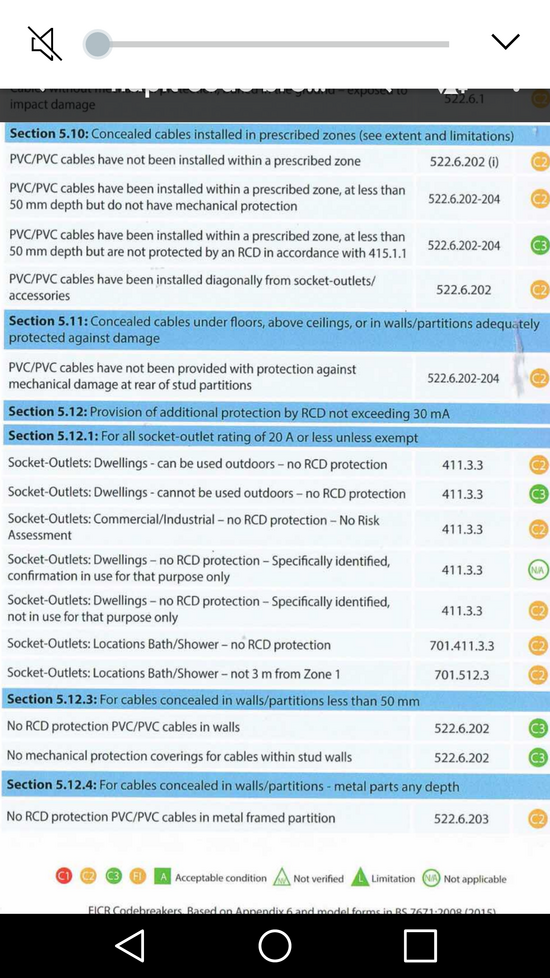
But the reg 411.3.3 specifically says risk assessment required and even if ther was its clearly not being used for a specific item of equipment. I still think C2 when the public are involved especially in terms of liability.
The regulations do not differ on who is using the sockets so you can’t make that argument
The fact that a documented risk assessment can be used on non domestic installations gives, if anything gives a bit of a relaxation on 411.3.3
 
Last edited by a moderator:
The regulations do not differ on who is using the sockets so you can’t make that argument
The fact that a documented risk assessment can be used on non domestic installations gives, if anything gives a bit of a relaxation on 411.3.3

Screenshot_2019-01-04-21-07-18.png
 
But the reg 411.3.3 specifically says risk assessment required and even if ther was its clearly not being used for a specific item of equipment. I still think C2 when the public are involved especially in terms of liability.
The regulations do not differ on who is using the sockets so you can’t make that argument
they do and can not speak for the whole industry.
I can show you an NICEIC similar list which is available to the online customers which gives a C3.
You see the problem
 
I disagree on the relaxation. Its always been for specific use items and in this instance the socket has extention leads plugged in etc. The hotel would be liable in my eyes. You can make the argument as in my eyes the reg does differ from the users when it specifically says risk assessment to be performed in non dwelling etc...
 
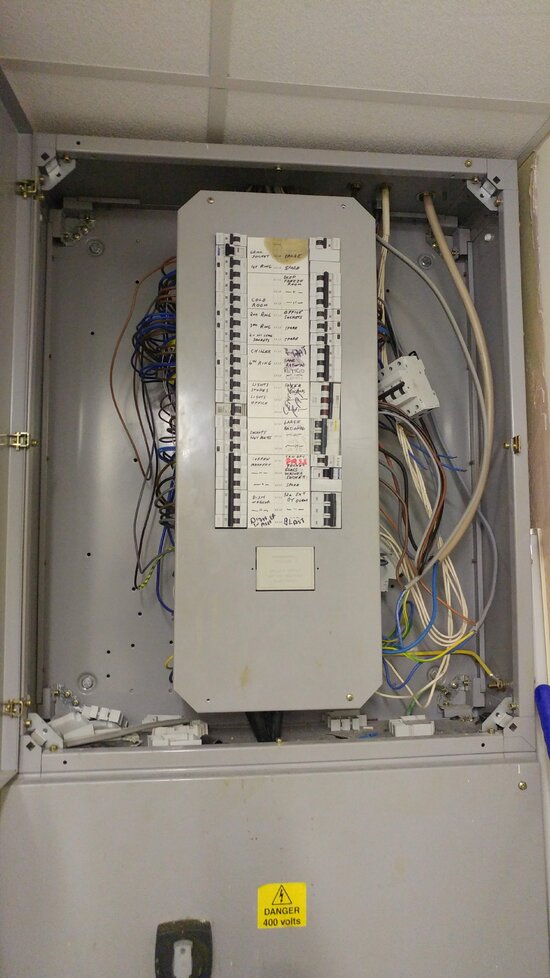
I walked into this in a cleaners cupboard in the hotel kitchen. Apparently been like this since it opened. I think you will take your sloppy workmanship statement back. The lid was wide open, i havnt opened it.

20180612_154903.jpg
 
I’ll imagine that someone’s been using that as a locker! They probably keep the 5mm retaining bolts on a keychain!
Nice to see proper blanks being used!
 
Risk assessments are not out of the window on non domestic installations 411.3.3 an exception to (i) is permitted where other than an installation in a dwelling, a documented risk assessment determines that rcd protection is not necessary
I stand corrected, thought that was being dropped.
At least they’ve took on board that the RA must determine “RCD protection is not necessary”.
 
I note that the Hotel is 12 years old, which means it was designed to the 16th edition.
As such RCD protection was not required unless it could reasonably be assumed that the sockets would be used to provide power to portable equipment used outdoors.
If the inspection is being conducted in accordance with BS7671, then the lack of RCD protection would be a code C3 (complied at the time of design/construction).
 
Another thought, there should be two other Inspection Reports somewhere (5 yearly for hotels?), which would be worth viewing.
 
This is the 2nd eicr. The 1st isnt worth viewing as it doesn't have any observations and wasnt completed by anyone i would consider competent. The original installation Certs are also available. Everyones main topic has been the RCD sockets etc. My main qustion is what would you suggest to the customer about the consumer units considering the top sufrace has been removed, no grommet strip, no gland on the swa ,plasterboard large hole not made good, alot of dust present in alot of them because of this, you can feel a draft through them... it could be a very expensive fix replacing them. Also some of the consumer units are in wardrobes, so theyre not installed flush to the ceiling so theres a gap. Could be a case of sliding paxoling or drilling holes and reterminating through.
 
The IP rating for the top of CU/DBs is to prevent fingers and small foreign objects from entering the enclosure.
I would consider using an intumescent sealant to seal round cables in holes in the plasterboard.
Same with those in wardrobes, though the CUs would have to be pushed up to the top of the wardrobe to make an effective seal.
If the gap in the wardrobes is to great, then a new top cover for the CU would be necessary.
 
I'm surprised that the top plate of the CCU has been removed although the hole sizes would be the same and the IP rating when the front cover is replaced fullfills IP4X. Glanding off the SWA is not a problem if it is done before the board is fitted. The SWA is/was used, I presume, with supplementary bonding in place and to aviod the necessity to fit RCDs and also assumes this lnstall was completed before the 18th ed.
Is this really a C2? C3 max and a note regarding the lack of RCDs
 
If the inspection is being conducted in accordance with BS7671, then the lack of RCD protection would be a code C3 (complied at the time of design/construction).

The edition of the regulations it was designed to doesn't matter, the EICR is carried out to the current edition.
Coding does not change based on when it was designed, if it does not comply with the current edition and this non compliance is related to safety then you code it.

The regulations do say that compliance with a previous edition does not necessarily need an observation to be made and coded, so for example red, yellow, blue conductors don't comply but do not requiteentioning on the eicr. This does not say that everything which previously complied is OK now.

One of the key reasons to carry out EICRs is to identify areas where an installation can or should be improved as regulations have changed to reflect advances in knowledge and technology.
 
I think, as you well know, the regulations are not retrospective and so would be acceptable to that previous design. Whether or not it complies to the current edition is something else.
As long as the requirements were met for the appropriate edition then it is regarded as safe. That doesn't mean that updating maybe required due to its application. Otherwise the regulations become retrospective which is not what it states in BS7671.

The risk assessment will asertain whether its suitable to be used.
 

OFFICIAL SPONSORS

Back
Top