I agree with @westward10 when you had the units heads removed did you just visually inspect them or did you give each wire in the interconnects a tug with some needle nose pliers? I have come across them before where the cable looks as if it's terminated properly but is not.
I would try the ones with three cables to them first.
While they are all down a long lead between them and continuity test is next on the list and just work through the circuit until you find the culprit!

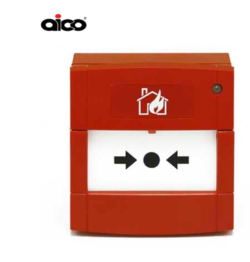
I would definitely have a good look at the call point as well, is it one with a test function on it?
I take it it's not one of these?
 
As @westward10 had said. You just need to test for continuity between the cables.
You're making it complicated. Keep it simple. You just simply test for continuity and slowly narrow down where the problem is depending on whether you do of don't have continuity between the conductors.
 
Can I reliably check continuity with a wander lead and fluke 2 pole tester? It has the continuity function
Probably as long as the tester is capable of working over a distance and isn't just a little multimeter type one which may not
 
Sorry for the incessant questions. Just want to understand the situation before I carry out the necessary tests.
One thing I am still unclear on: if the interconnect cable is appropriately connected to some devices and the link is broken at others (loose connection or a short), would you still expect the devices that are connected to sound in tandem? Or does it require a complete circuit across all devices?
 
The alarms do know how many devise's you have connected, have you tried all your alarms to see if any of them sound in tandem.
 
@Neptune. I dont know if its been suggested earlier, but where in the UK are you?
Maybe there's a forum member nearby could assist for a crate of beer.

An electrician will have the know-how to fault find in a logical manner, and will be much quicker than you just poking around.
Having reread the thread, this is a rental property? so i assume its empty at the moment, as you cant let it out without working fire detection.
 
In an earlier post you said that at least two detectors are faulty.
Buy two new ones, take the two bases out of the boxes, and connect them together with three pieces of wire on the bench. Fit one of the new detectors to one of the bases and then fit each of your existing detectors, fitted with a good battery, to the other base in turn. Push the test buttons to check that each will trigger the other.
got it! Thanks again
 
I agree with @westward10 when you had the units heads removed did you just visually inspect them or did you give each wire in the interconnects a tug with some needle nose pliers? I have come across them before where the cable looks as if it's terminated properly but is not.
I would try the ones with three cables to them first.
While they are all down a long lead between them and continuity test is next on the list and just work through the circuit until you find the culprit!

I would definitely have a good look at the call point as well, is it one with a test function on it?
I take it it's not one of these?
It's this type of device:
1634655434146.png
Do you know if this takes a key or somehow doubles up as a testing point?
 
Is it that exact call point. That type you test by inserting a fork type key in the bottom and sliding the cover down.
 

OFFICIAL SPONSORS

Back
Top