With an installation of that age it may have VIR cable (crumbly) and or problems that would trip the RCD/RCBO fitted. So usually it is best to do some testing beforehand as it may not just be the cost of replacing the board but also rectifying faults found when doing some testing to assay if the RCD will trip on any circuits. In the worst circumstances it may require rewiring partially or more. Also tracking down any faults found can be so expensive that is it cheaper to re-wire, especially if it is on just one or two circuits. The fact it has not "blown" in the past decade or whatever may just be down to someone poking nails in the fuseholder for all anyone knows.
 
@Neptune. A 30A fuse will not blow, or even be overloaded, by a fault current 1000 times higher than the maximum fault current, of a particular type, that is allowed with current regulations. This is the main difference between your old board and a RCD or RCBO replacement.
 
Hi All,
Thanks for all your comments. I found this very helpful. I wanted to share the EICR results with you.
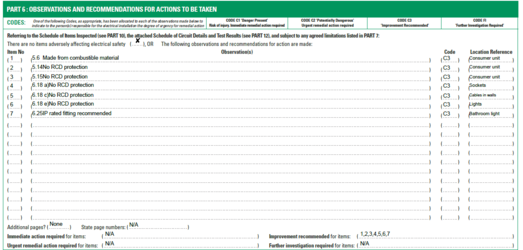
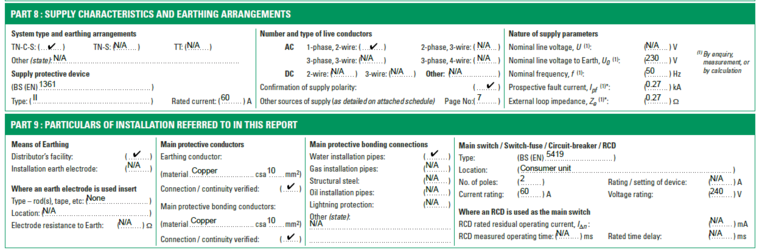
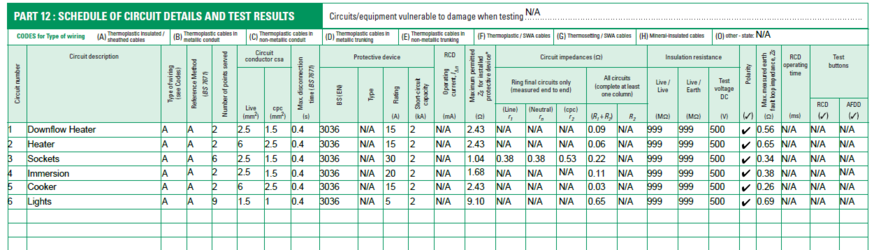
The electrician overall assessment is "satisfactory". He stated that the general condition was satisfactory and and correct cable and protective devices have been used. Readings were within the required thresholds. He has recommended a CU upgrade to provide RCD protection.
All the circuits have been coded as C3.

Please let me know if it would be informative to share any other contents of this report.

Given this assessment, it feels to me that I should still consider a board change but an initial quotation is £450 and perhaps in the short term, I should invest in the plug-in breakers. I would appreciate your advice on this.

Thanks again.
 
Given this assessment, it feels to me that I should still consider a board change but an initial quotation is £450 and perhaps in the short term, I should invest in the plug-in breakers. I would appreciate your advice on this.

plug in MCBs cost around a tenner each, and will give slight benefit. regarding the £450 quote, is that a duak RCD board or RCBO? with or without SPD? either way, you'll get far more benefit from a new CU, notably the RCD protection to all circuits.
 
Hi All,
Thanks for all your comments. I found this very helpful. I wanted to share the EICR results with you.
The electrician overall assessment is "satisfactory". He stated that the general condition was satisfactory and and correct cable and protective devices have been used. Readings were within the required thresholds. He has recommended a CU upgrade to provide RCD protection.
All the circuits have been coded as C3.

Please let me know if it would be informative to share any other contents of this report.

Given this assessment, it feels to me that I should still consider a board change but an initial quotation is £450 and perhaps in the short term, I should invest in the plug-in breakers. I would appreciate your advice on this.

Thanks again.
Thanks for the update Neptune, we like to hear how things go ?

If you are happy to, could you post up a picture of the report (personal details of yourself and the electrician blanked out) so we could have a look?
 
I am trying to protect the confidentiality of the electrician and myself. Does the following help?
Let me know if you need to see any other parts.
1618216897716.png
1618216943465.png
1618216970121.png
 
I was going also comment about a tenner a time for the plug in MCBs. I don't know what others think but I'd have said it's a sparks job fitting them the first time as (from memory its been ages) the back fuse covers have to be changed, so if you factor in a hour of a sparks time you may well have spent £100-£120 on what is a short term fix. IMHO that cash is better going into a new board.

Also, as @telectrix was getting at, all consumer units are not equal. You want to be sure what you are getting. It could range from a screwfix special where any earth fault means you lose power to everything, to a decent brand board with surge protection, and each circuit having it's own earth leakage protection.

All that to say £450 really doesn't sound a bad price but do ask what board he'd fit.
 
I think the OP is either missing the point or not understanding the difference between MCB s and RCD .
Plug in Mcbs are not going to make any difference to the codings for lack of RCD protection.
I agree that RCD is the most optimal solution but I thought that the plug-in MCB 's could provide a more maintainable and user friendly system in the short term.
 
I agree that RCD is the most optimal solution but I thought that the plug-in MCB 's could provide a more maintainable and user friendly system in the short term.
I see your point, and it's an interesting paradox, as 5 amp fuses for lighting tend to be more resilient than a B6 MCB if a bulb goes. However if a rewireable fuse does blow, then an MCB is obviously easy to reset.

It sounds as though you already understand that fuses/MCBs protect the wiring from overheating and catching fire in various circumstances, whereas RCDs save lives by turning off the supply in a fraction of a second if they detect any electricity going 'missing in action' due to a fault or flowing through a person.

It might help to consider that just as the current Wylex board dating from the 80's has served well for many years, a new board now will serve for many years and the cost per year of service will in fact be low.
 
I agree that RCD is the most optimal solution but I thought that the plug-in MCB 's could provide a more maintainable and user friendly system in the short term.
User friendly or not, I thought the idea was to reduce the number of C2 or C3's on the EIRC?(improve safety) Adding plug in MCBs doesn't really deal with those. The codings are all regarding lack of RCD protection and the construction material or the consumer unit.
Also, is this a ground floor flat with a garden? Any sockets which could be used outdoors is a C2. As is (if you go by the guidance in the codebreakers book) not having RCD protection for cables buried in walls less then 50mm deep.
 

OFFICIAL SPONSORS

Back
Top